Category

Policy & Advocacy

Home / Policy & Advocacy
Policy & Advocacy

ADF says ACCC decision validates its concerns on Coles-Saputo deal

By RICK GLADIGAU, PRESIDENT, AUSTRALIAN DAIRY FARMERS

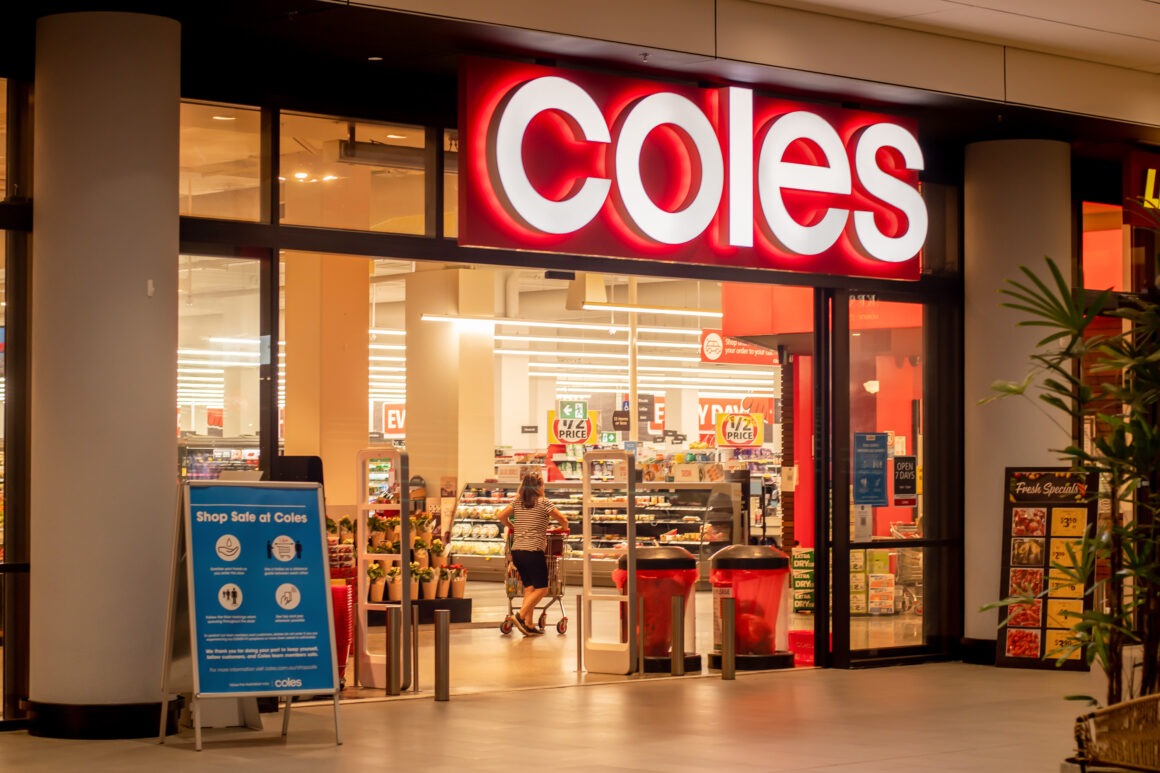
Dairy farmers are reassured by the Australian Competition and Consumer Commission’s (ACCC) decision to further examine Coles’s proposal to buy two milk processing sites from Saputo.

Australian Dairy Farmers (ADF) believes the ACCC’s decision validates its concerns about the proposed sale of Saputo sites at Laverton North, Victoria, and Erskine Park, NSW, to Coles. The sites produce fresh milk for Saputo’s Devondale brand, and for other parties, including Coles’s home-brand dairy products.

ADF is concerned the proposed acquisition could substantially lessen competition for raw milk and have further implications for the sale of dairy products at a retail level.

In June, we raised these concerns in a submission to the ACCC that opposed the deal. In reply, the ACCC has identified issues associated with the acquisition that it is investigating further.

In releasing the Statement of Issues, ACCC deputy chair Mick Keogh echoed our concerns and those of many of our members. “For NSW dairy farmers, concerns have been raised that this acquisition may change Saputo’s incentives to continue acquiring raw milk in NSW,” Mr Keogh said.

“If Saputo does exit NSW as a result of the acquisition, this would leave limited competition in regions of NSW, which could result in farmers receiving lower prices for their raw milk.

“We have heard strong concerns across the industry about how the acquisition will strengthen Coles’s position in the dairy supply chain.

“Many industry participants have expressed concerns that the acquisition will result in Coles consolidating its private label milk production, which would increase its bargaining power in negotiations with dairy processors and dairy wholesalers.

“The ACCC is concerned that Coles’s increased bargaining power could lead to reduced competition at the wholesale level, impacting on processors’ long-term viability and with the potential for flow on impacts to farmers in Queensland and regions of NSW.”

Like ADF, the ACCC has raised concerns the sale of the Erskine Park facility may see Saputo exit market/s for raw milk in NSW and give Coles the ability to foreclose or frustrate competitors.

As part of an ACCC consultation process, interested parties have until August 3 to respond to the Statement of Issues. ADF has, of course, submitted a response.

From the outset, ADF has argued competition would decline over the long-term, if Coles began to preference its own brands over competitors in the procurement of farm suppliers and sales in its retail outlets.

ADF does not wish to see a sale that disadvantages dairy farmers in the long-term.

The Competition and Consumer Act 2010 requires the ACCC to approve the acquisition. The legal test the ACCC applies in considering the acquisition is in Section 50. This requires proposed acquisitions to not have the effect of substantially lessening competition in a market.

In theory, Coles already can (in effect) set the retail price of competitor brands in its stores. This deal would give Coles total control of every fresh milk price within its sphere of influence.

An incentive already exists for Coles to act in this way, however, the proposed acquisition, bringing with it increased vertical integration, maximises the potential financial gains for the retailer.

If the sale proceeds, we want Coles to guarantee that all existing Saputo farmers supplying milk to the processing plants will be offered milk supply agreements with either Coles or another party over the long-term. We do not want to see contracts restricted to Coles’s suppliers only.
Dairy farmers need strong competition for their milk. They do not want a deal that could reduce competition for their milk and reduce the supply or choice of products for consumers.

ADF is seeking an outcome from the ACCC that does not reduce competition in the value chain and benefits – or at least does not disadvantage – dairy farmers and the market, more generally.

ADF not want to stand in the way of Saputo, one of the country’s largest dairy processors. We hope, irrespective of the outcome of the investigation, that Saputo and Coles will act in the best interests of the dairy farmers of Australia.
Policy & Advocacy

Coles’ dairy deal sparks concern

By RICK GLADIGAU, PRESIDENT, AUSTRALIAN DAIRY FARMERS

Today, 1 June, is World Milk Day – a day when we celebrate a nutritious food that makes for a healthier world.

For Australian dairy farmers, today is also D-day. It’s the day when dairy farmers find out what price processors will offer for their milk at the farmgate for the coming supply season.

The Mandatory Dairy Code of Conduct requires processors to publish these prices and, in doing so, the code has brought more transparency to milk pricing and certainty for farmers.

Yet, amid this celebration and certainty there is caution because Australia’s competition watchdog is considering Coles’ proposed acquisition of two milk processing facilities from Saputo.

This is a deal Australian Dairy Farmers (ADF) has voiced its concerns about – both publicly and in a submission to the Australian Competition and Consumer Commission (ACCC).

Specifically, we are concerned about issues around price transparency, competition, market power and control.

Already, Coles has the theoretical ability to set the retail price of its competitor brands in all its supermarkets. This deal would make Coles a processor, affording total control of every fresh milk price within the Coles sphere of influence.

The supermarket giant wants to purchase Saputo’s Laverton, Victoria, and Erskine Park, NSW, facilities. The bulk of the processing done at these two facilities is to supply Coles’ home brand milk products.

ADF does not want to see a deal that disadvantages farmers. Dairy farmers need strong competition for their milk.

ADF is concerned that the proposed acquisition would provide Coles with a stronger incentive to restrict or discriminate against the branded milk it offers, to the advantage of its private label milk.

An incentive already exists for Coles to act in this way, however the proposed acquisition, bringing with it increased vertical integration, maximises the potential financial gains for the retailer.

If the sale proceeds, we want Coles to guarantee that all existing Saputo farmers supplying milk to the processing plants will be offered milk supply agreements with either Coles or another party over the long-term. We do not want to see contracts restricted to Coles’ suppliers only

A chequered past of milk discounting

ADF is conscious of Coles’ prior conduct, in particular the introduction of the $1 per litre milk pricing model which hamstrung dairy farmers for eight years.

We note there was further criticism of Coles’ behaviour when it finally increased prices and promised to pass on the 10 cent per litre “drought levy” to farmers. Coles committed to pay around $5.25 million to processor Norco to resolve the concerns after the ACCC became involved.

However, it must be noted that poor behaviour is not exclusive to any one party in the supply chain.

The supermarket duopoly already has enough market power to lower prices for milk products across the board and dedicate extra shelf space for private label products.

A vote of confidence in dairy’s future

For now, we must remain upbeat as we await July 20 – the provisional date the ACCC has set to announce its findings.

To remain positive, in the spirit of World Milk Day, the deal can also be viewed as a vote of confidence in the future of dairy.

ADF has confidence in the ACCC’s review process and does not want to stand in the way of Saputo, one of the country’s largest dairy processors. We hope, irrespective of the outcome of the review, that both Saputo and Coles will continue to act in the best interests of those ADF works for – the dairy farmers of Australia.

We hold this hope in good faith, bearing in mind that retailers, processors and farmers all need each other.

On World Milk Day, we encourage all industry stakeholders not to overlook the value of the nutritious food produced by dairy farmers in Australia.

This year, the Australian dairy industry has a local theme for World Milk Day – “make your mornings with milk”. The campaign encourages everyone in the dairy supply chain to take to social media with a photo or video showing how you “make your mornings with milk”. Don’t forget to tag #WorldMilkDay and #EnjoyDairy … just as we do at ADF!

Biosecurity, Farming operations, Policy & Advocacy

ADF seeks change to Australia’s biosecurity system

By CRAIG HOUGH, STRATEGY & POLICY DIRECTOR, AUSTRALIAN DAIRY FARMERS
Dairy is working alongside partners in the livestock industry and the Australian Government to transform Australia’s biosecurity system.

As globalisation continues to increase the rates of movement of both people and goods into Australia from areas where pests and diseases are more widespread, the risk to our industry is increasing.

Biosecurity affects the profitability and sustainability of our industry. An incursion, of any sort, lowers production, disrupts trade and adversely impacts animal welfare and the mental health of farmers and stakeholders. For example, the Australian Bureau of Agricultural and Resource Economics and Sciences (ABARES) estimated a widespread FMD outbreak in Australia would have a direct economic impact of around $80 billion.

In August 2022, Australian Dairy Farmers (ADF) made a submission to the Senate’s Rural and Regional Affairs’ committee’s Inquiry into the Adequacy of Australia’s biosecurity measures and response preparedness, in particular with respect to foot-and-mouth disease (FMD).

Our submission endorses, and builds on, the Australian Government’s National Biosecurity Strategy, which provides a 10-year roadmap for significant change to our biosecurity system.

An analysis of various reports from the Inspector General of Biosecurity, the CSIRO, independent reviews and consultation with ADF members and stakeholders informed this submission. For example, the CSIRO report Australia’s Biosecurity Future: Unlocking the next decade of resilience in 2020 found that between 2012 and 2017, the annual number of interceptions of biosecurity risk materials at Australian borders rose by almost 50 per cent. Such an increase in threats requires an increase in capability and efficiency in response.

So, ADF is calling on the Australian Government for additional reforms to the biosecurity system to ensure Australia is fully prepared to respond swiftly to the growing biosecurity threats.

Specifically, our submission calls for everyone to ensure exotic animal diseases do not enter Australia. We call for reforms to governance, funding, disease categorisation, surveillance and detection, diagnostics and vaccine development and a review of compliance measures.

The key recommendations in our submission include:

  • Consolidation of the separate governance models into one biosecurity governance model for animals and one for plants
  • More specific details on what actions and outcomes biosecurity funding is being directed towards to improve funding transparency
  • A commitment from Government for ongoing funding at or above 2016-17 levels in real terms, and to work with industry to explore establishing a dedicated industry biosecurity levy
  • Reinstatement of the 80 per cent screening target at the borders
  • A review of biosecurity infringements and penalties issued over the past decade to determine whether enforcement has been adequate
  • Transforming the Australian Centre for Disease Preparedness into a centre of excellence for vaccine and diagnostics capability for livestock diseases to enhance our ability to develop better vaccines and biosecurity tools
  • Amending the Biosecurity Act 2015 to drive continuous improvement in the system.
  • An explanation of the rationale of these reforms can be found in the ADF submission. A final report from the Senate committee is due to be tabled in the Senate on 24 November 2022.

    As we know, there are no silver bullets for biosecurity. Biosecurity is everyone’s business – it is a shared responsibility. We need adequate measures in place to protect Australia’s agricultural industry from any threats of pests and disease, and this involves working together to protect our farms, livelihoods and natural environment.
    —–
    ADF’s submission can be viewed at: www.aph.gov.au/Parliamentary_Business/Committees/Senate/Rural_and_Regional_Affairs_and_Transport/FMDBiosecurity/Submissions
    For more about the National Biosecurity Strategy:
    www.biosecurity.gov.au/about/national-biosecurity-committee/nbs

    Labour, People & Community, Policy & Advocacy

    Dairy gets seat on jobs taskforce

    By CRAIG HOUGH, STRATEGY & POLICY DIRECTOR, AUSTRALIAN DAIRY FARMERS

    Resolving workforce shortages in Australian agriculture, including the dairy sector, is a key priority for government, unions and rural industry in 2022/23.

    Over 110 recommendations emerged from the Jobs and Skills Summit in September 2022. These need to be analysed and formalised into a White Paper and funded via the October 2022 Federal Budget. Priority should be given to actions that help resolve worker shortage now like providing $36.1 million in additional funding to accelerate visa processing and resolve the visa backlog.

    Agriculture Minister Murray Watt has announced a new tripartite Agricultural Workforce Working Group. The group brings together the Australian Government, unions and employer groups to generate solutions that better skill, attract, protect and retain workers in the agriculture and processing sectors.

    Through collaboration, the working group will ensure the agricultural sector benefits from announcements made at the Jobs and Skills Summit in relation to skills, migration and worker protections.

    Dairy has secured a place in this milestone taskforce, alongside three other employer groups.

    ADF National Council member Ann Gardiner was named representative for the dairy industry, with an alternate member yet to be nominated. This is a fantastic achievement for the Australian dairy industry.

    Farm workforce shortage dominates dairy conversations
    Although the working group is a crucial step in the right direction, more action is needed. The dairy industry requires immediate support and long-term planning to address the systemic worker shortage.

    This issue is long-standing but has been exacerbated by the pandemic, particularly the Omicron outbreak which saw thousands of workers along the dairy supply chain having to isolate because they have caught COVID-19 or are close contacts.

    The National Agriculture Workforce Strategy, which was launched last December, was welcomed by ADF as it contains 37 recommendations to modernise agriculture’s image, attract and retain workers, embrace innovation, build people’s skills, and treat workers ethically. Most of these recommendations align with the Jobs Summit recommendations. In some instances, the strategy provides a more effective option than the Summit’s proposal. For example, the strategy recommended establishment of a Workforce Data Unit to improve agriculture workforce statistics and forecasting.

    Currently, significant gaps exist like with the ABS’s Job Vacancy data which reports on most sectors but not agriculture. The Jobs Summit acknowledged the issue but proposed a different solution. It recommended the establishment of an independent body called Jobs and Skills Australia to undertake this and other workforce planning tasks. A unit in the department is a preferred option because it is quicker to establish, subject to direct Ministerial oversight and is more cost-effective. It is important that the new working group considers the strategy in its deliberations. Significant work was undertaken by ADF and other agriculture groups to develop the strategy with government. We do not want to see this disregarded just because it was a former government initiative.

    At an agriculture workforce roundtable chaired by Minister Watt in Brisbane back in August, I highlighted the efforts industry is taking to help address the worker crisis. The People in Dairy website provides extensive workforce information for potential and current employees and employers in the industry.

    In September, Dairy Australia launched a new national marketing campaign to promote the benefits of working in dairy farming and encourage Australians to explore a job in dairy. This extension of the Dairy Matters campaign is being delivered into dairying regions across TV, YouTube, radio, social media and local newspapers. We encourage jobseekers to visit www.dairyjobsmatter.com.au for more information.

    All these efforts to bring people to industry – and keep them – are vital to resolving the workforce shortage.

    1 2