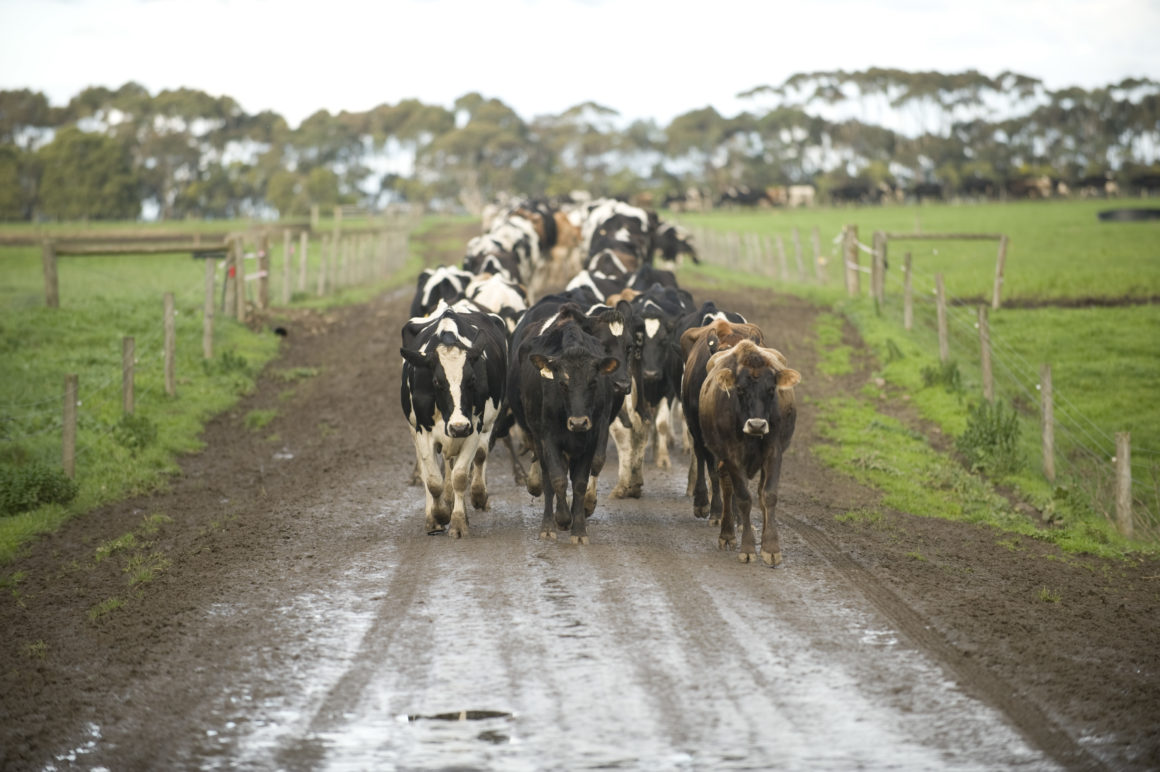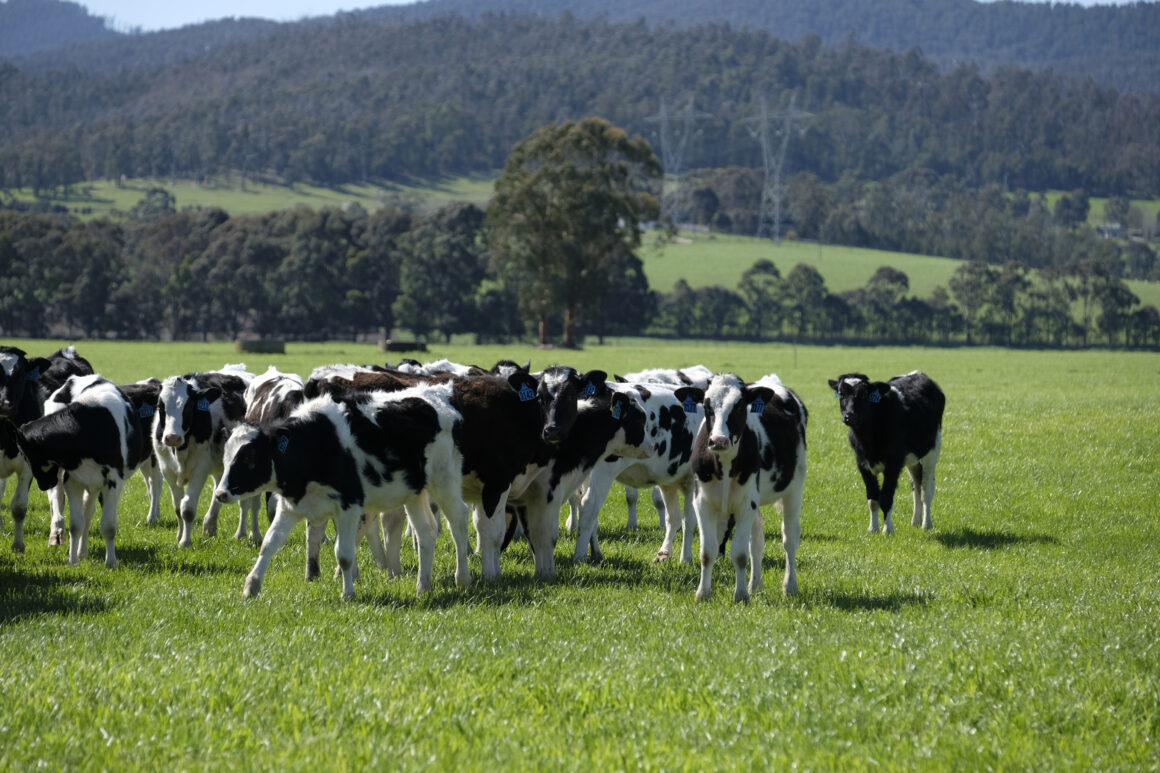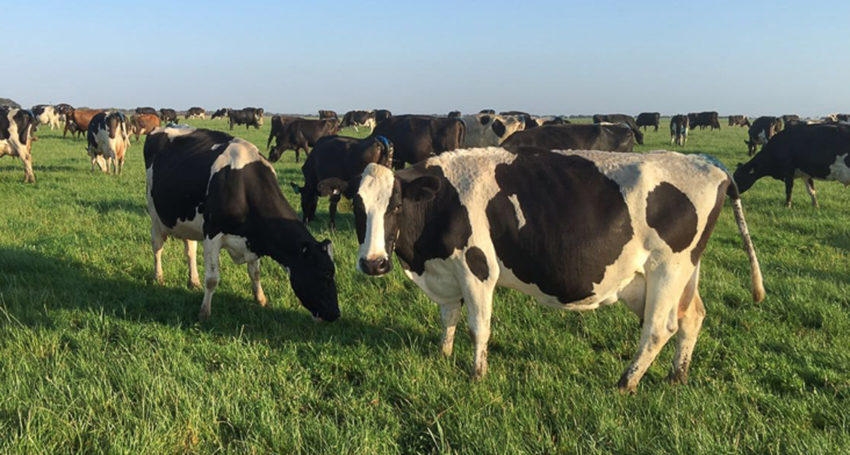
Dairy cows in a paddock.

Settlement reached in ADF-VFF court case

The Presidents of Australian Dairy Farmers (ADF), United Dairy Farmers of Victoria (UDV) and Victorian Farmers Federation (VFF) have announced a settlement in the legal dispute over VFF UDV’s membership of ADF.

The settlement will see VFF UDV remaining a member of ADF working collaboratively for the benefit of Victoria’s dairy farmers.

Comments attributable to VFF UDV President Bernie Free:

“The resolution of this dispute between the VFF UDV and ADF is both welcome and long-awaited.

“During this period VFF UDV and ADF have continued to collaborate in good faith, serving farmers on ADF’s National Council and Policy Advisory Groups.

“However, it will be reassuring for all in industry to have this settled in recognition of what dairy farmers really want, which is for us to get on with the business of dealing with the issues affecting dairy farmers.

“VFF UDV and ADF are looking forward to collaborating on ways to grow and improve both organisations’ connection to dairy farmers, with the goal of a more effective and sustainable future.”

Comments attributable to VFF President Brett Hosking:

“This partnership represents the beginning of a new era for VFF where in-fighting has ended and the focus has shifted to outcomes for members.

“I want to thank the team at ADF for meeting collaboratively with VFF to reach this exciting opportunity.

“Peak bodies play an enormous role in protecting and growing opportunities for our farmers.

“Whether it be trade, biosecurity or protecting our research and development levies, it is vital that Victorian farmers are represented on issues that impact their businesses.

“VFF will continue to engage and look for opportunities to ensure the representation our members enjoy nationally is as effective as possible.”

Comments attributable to ADF President Ben Bennett:

“It has been a challenging time for all, and I am relieved we have finally reached both an amicable resolution and agreement to work together in good faith.

“The critical issue now is to focus on our core business and the path forward. That includes ensuring grass roots dairy farmers have certainty regarding the financial sustainability and autonomy of their representative bodies to champion dairy farmer issues.

“Victoria represents 64% of Australian milk production, so it is critical we are united and working together. That is especially true given the shrinking milk pool, where Australia is now a net importer of dairy.

“ADF and VFF UDV have agreed to work cooperatively and cohesively on dairy policy, representation, and membership activities.

“This will benefit both organisations and help us deliver for the dairy farmers of Victoria and, by extension, Australia as a whole.”

Statement on outbreak of FMD in Germany

The following comments are attributable to ADF President, Ben Bennett: 

The outbreak of Foot and Mouth Disease (FMD) in Germany poses no immediate threat to Australian dairy due to the strict quarantine and biosecurity regulations protecting Australia from disease incursion.  

However, this outbreak is a timely reminder to farmers, the community, industry, government and its agencies of the importance of biosecurity measures and the need to maintain our nation’s vigilance and preparedness against potential disease incursions.  

Such outbreaks have a devastating impact on the farmers involved and may also have significant implications for global agricultural trade, with Germany being an exporter of beef and dairy products, however it is too early to assess the significance of this event.   

As Australian farmers we need to ensure our on-farm biosecurity plans are up-to-date. This includes maintaining a visitor’s log, requiring visitors to decontaminate footwear, and excluding any visitors that have visited or originated from a country where FMD is present from their farm for at least seven days after their return to Australia.  

ADF will continue to work with industry to monitor the German outbreak and will support efforts to keep dairy farmers updated if and when the situation changes.  

ADF congratulates Victorian farmers’ new leadership

Australian Dairy Farmers (ADF) today acknowledges and congratulates Brett Hosking and Peter Star on their election to the positions of President and Vice-President of the Victorian Farmers Federation (VFF) and its Board of directors.

ADF also congratulates Bernie Free on his appointment as United Dairyfarmers of Victoria (UDV) President, Scott Young as Livestock President, Peter Miller as Livestock Vice-President and all other commodity council appointments.

“The comments made by Mr Hosking prior to and subsequent to his election already today demonstrate a willingness to work with peak commodity councils and the National Farmers Federation,” ADF president Ben Bennett said.

“I consider this reassuring and importantly his comments demonstrate a sound understanding of the functions of peak commodity bodies with respect to issues such as biosecurity, trade, and oversight of research and development corporations (RDCs).

“The dairy farmers within Victoria have also demonstrated their ongoing support for ADF through UDV’s continued participation in ADF’s National Council and Policy Advisory groups.

“The appointment of new VFF Board directors affords both organisations the opportunity for a ‘circuit breaker’ to sit down and, hopefully, amicably resolve the dispute between the previous VFF Board and ADF that has been ongoing over the last 18 months.”

Mr Bennett said he would reach out to the VFF’s new board and president with an offer to meet at a mutually convenient time to discuss how the two organisations can work together into the future.

“If media reports are correct regarding VFF membership and finances, the new VFF directors clearly have a huge recovery task ahead of them. However, it is my intent that our respective organisations work collectively and collaboratively towards a mutually beneficial outcome for all Victorian farmers and dairy farmers in particular.”

ADF announces AGM and election results

Australian Dairy Farmers (ADF) held its Annual General Meeting earlier today, with David Beca, Heath Cook, and Ben Bennett returned to the Board.
Ben Bennett was re-elected President for a period of two years unopposed at a National Council meeting immediately following the AGM.

ADF Chief Executive Officer Stephen Sheridan congratulated the three returning Directors.

“David Beca returns once more as an Independent Director and Heath Cook and Ben Bennett as Business Directors,” Mr Sheridan said.

“I thank Andrew Aldridge for contesting the Board vacancies at today’s AGM, as well as for his time and commitment as a Policy Advisory Group chair and a National Councillor.”

“On behalf of ADF, I look forward to a constructive year ahead with some significant priorities already on the cards, including a review of the Dairy Code of Conduct and a Federal Government election.”

Dairy farmers welcome avian influenza funding

Australian Dairy Farmers (ADF) has welcomed the Federal Government’s announcement today of an extra $95 million in preparedness funding for the H5 strain of avian influenza.

ADF President Ben Bennett said: “Biosecurity is a critical issue for the viability of our industry and we are pleased to see the Federal Government is on the front foot with additional Government funding.”

In particular, the support of enhanced surveillance to ensure timely detection and response if the disease enters and spreads in animals within Australia, and strengthening of preparedness and response capability to mitigate impacts for the production sector are welcome.

Mr Bennett said he understands that an incursion is likely to impact wild bird populations unfortunately also placing the poultry industry at risk. Any incursion of the H5 strain would be significantly less likely to impact the dairy sector.

“However, given the crossover of a rare strain of the virus to dairy cattle in the United States, and in very rare cases a small group of workers with minor symptoms, we are taking the H5 strain of the virus seriously.

ADF and the broader dairy sector have been working on an industry-specific response plan in conjunction with Animal Health Australia and other agriculture industries.

Mr Bennett said: “In Australia we are fortunate to have rigorous and robust biosecurity and food safety systems and regulations which protect our industry and consumers. We have the added advantage of forewarning and learning from what has occurred in the United States.

“We are working closely with industry and government to further strengthen our biosecurity and ensure we’ve the right support in place. In particular, farmers need help to bolster on farm biosecurity and surveillance measures to assist early detection and reporting.

“We also welcome support for increased testing to ensure strain variation identification, and preparation for potential losses, including proper quarantine, decontamination and disposal of milk and impacted birds,” he said.

Mr Bennett said all Australian dairy farmers need to familiarise themselves with the industry’s extensive biosecurity plans and protocols and review on-farm biosecurity measures.

“We know the arrival of spring migratory birds is increasing the risk of avian influenza arriving on our shores, making it more important than ever to make sure on-farm biosecurity practices and processes are up to scratch.

“All farmers should keep the biosecurity hotline number close to hand. Any suspicious cases of sick birds (wild or domestic) should be reported for analysis.

“Australian Dairy Farmers will be continuing to keep a close eye on the situation, helping ensure the industry is aligned and prepared.”

The biosecurity hotline is 1800 675 888.

Dairy farmers congratulate ACCC for taking a stand against supermarkets

Australian Dairy Farmers (ADF) has applauded the competition watchdog’s pursuit of the questionable pricing tactics used by the big two supermarkets, on the same day Woolworths shaved another 5c/litre off the cost of its homebrand milk.

“What we’ve seen with the ACCC taking action against Coles and Woolworths is a clear signal that the powers of these supermarkets is too great,” ADF President, Ben Bennett said.

“Coles and Woolworths must understand that these moves, on the back of processors reducing prices to farmers, have real-world consequences for rural communities and the future of Australian dairy production.

“Decisions like this are not made in a vacuum. The reduction in milk prices may seem trivial to consumers, but for dairy farmers, it can mean the difference between staying afloat or shutting down.”

Woolworths cuts homebrand milk prices

ADF strongly condemns the decision by Woolworths to reduce milk prices by 5 cents per litre – a move that directly threatens the viability of dairy farmers across the country.

“This price cut undermines the long-term sustainability of the dairy industry and shifts the burden of cost savings directly to the backs of hardworking farmers,” Mr Bennett said.

According to the latest forecasts from the Australian Bureau of Agricultural and Resource Economics and Sciences (ABARES), milk production values are already expected to fall by $570 million to $5.5 billion, with most of this decline reflecting reduced farmgate milk prices.

“In no other industry can a pricing decision by management wipe half a billion dollars in value from an entire sector—most of which is directly tied to the returns that farmers receive,” Mr Bennett said.

“Such actions put immense pressure on our dairy farmers who are already grappling with rising costs of production and unfavourable weather conditions.

“These decisions have been made by major retailers and processors without adequate regard for the broader industry implications.”

Dairy farmers welcome Australia’s new Minister for Agriculture

Media release
Monday, July 29, 2024

Australian Dairy Farmers (ADF) has today welcomed Australia’s new Federal Minister for Agriculture, the Hon. Julie Collins MP.

ADF president, Ben Bennett, said he was pleased to welcome a Minister from a strong state for agricultural production, including dairy. “We appreciate Minister Collins’ acknowledgement of the vital role that agriculture plays in our country,” Mr Bennett said.

“The Australian dairy industry is the third largest agricultural industry in Australia and dairy farmers are world leaders in quality, innovation, and sustainability, producing milk and dairy products that are in high demand both domestically and internationally.

“However, the dairy industry faces serious challenges, including the ongoing issues of profitability, sustainability and regulation. Those challenges require strategic policy support and robust collaboration between government and industry stakeholders.

“We look forward to working collaboratively to address the challenges and harness the opportunities ahead.”

Mr Bennett said ADF was inviting the Minister on a farm tour, providing the opportunity for her to engage directly with industry experts and local farmers, witness firsthand the innovative practices that make dairy a global leader and discuss the issues impacting the dairy sector.

Mandating Food and Grocery Code a win for dairy farmers

Media release
Tuesday, June 25, 2024

Australia’s peak dairy farmer representative body says making the Food and Grocery Code (FGC) mandatory will benefit dairy farmers and create a level playing field for all suppliers.

The Federal Government yesterday committed to implementing all 11 recommendations contained in the independent review of the Food and Grocery Code of Conduct led by Dr Craig Emerson.

Australian Dairy Farmers (ADF) has welcomed the move to strengthen the code, which vindicates its review submission calling for the FGC to be mandated.

“A mandatory code promises significant benefits for dairy farmers by ensuring fairer trading practices and enhancing protections within grocery supply chains,” ADF President, Ben Bennett said.

“This shift from a voluntary to a mandatory code ensures that all major supermarkets must adhere to the Code, creating a level playing field for all suppliers.”

The Dairy Code of Conduct remains in place as an independent code and continues to regulate conduct between dairy farmers and processors.

Mr Bennett said while the industry welcomed changes to the Food and Grocery Code, it was important that the Dairy Code prevails as the standalone code regulating processers and dairy farmers.

“Additionally, it is crucial that the government gets the interaction between the strengthened Food and Grocery Code of Conduct and the existing Mandatory Dairy Code of Conduct right,” Mr Bennett said.

“These protections will help dairy farmers report unfair practices without fear of retribution, promoting a more transparent and equitable market environment,” Mr Bennett said.

“The combined effect of these codes will help enhance market transparency, ensuring dairy farmers receive fair treatment and fostering trust between suppliers, wholesalers and retailers,” Mr Bennet said.

“We look forward to working with the government and supermarkets to implement these changes effectively and continue to advocate for the best interests of our farmers.”

Update on unpaid VFF-UDV membership fees

Long-running talks between Australian Dairy Farmers (ADF) and the Victorian Farmers Federation (VFF) have failed to resolve a dispute over the non-payment of $500,000 in member fees by VFF, ADF has announced today.

“ADF has been very patient over the past 12 months. ADF has endeavoured to pursue a resolution via negotiation, yet the parties are too far apart. It has become apparent that the only way to resolve this matter will likely be via court action,” says ADF President Ben Bennett.

“The ADF Board considers it has a fiduciary duty to the organisation, to ADF’s other State members, and to dairy farmers themselves, to pursue an outstanding debt that has been unreasonably withheld.

“Farmers should be aware these are dairy farmers’ levies that have been collected by VFF on the grounds they would be remitted to ADF but have been unjustifiably withheld by VFF.

“Not only has VFF withheld these funds, but the dairy farmer members of VFF, the United Dairy Farmers of Victora (UDV) themselves, have continually requested that VFF remit these funds to ADF.

“It is unfortunate to find ourselves in this position and while ADF remains open to finding an amicable resolution, ultimately we must resolve the matter once and for all and move on for the good of dairy farmers and the industry.”

Ben Bennett named ADF President, David Beca is independent director

Victorian dairy farmer Ben Bennett was appointed President of Australian Dairy Farmers (ADF) and Chair of the ADF Board, at a meeting of the ADF Board and National Council today.

Mr Bennett has been a Director of the ADF Board for the past two years. He farms in south west Victoria and has 13 years’ experience in management roles in the meat industry in Australia, New Zealand and India.

“As President, I fully realise there are challenges ahead for the dairy industry,” Mr Bennett said.

Mr Bennett paid tribute to outgoing President Rick Gladigau, who withdrew his nomination. Mr Gladigau will remain on the Board as a Business Director after serving as President for the past two years.

“The past 12 months has been very busy for ADF with lots of change and big issues to tackle. Rick’s stoic leadership with Trade Minister Don Farrell around the free trade agreement with the European Union helped Australian dairy double down on its long-held position on the deal.

Mr Bennett welcomed the new directors to the ADF Board, Queensland dairy farmer and past President of eastAUSmilk, Matt Trace, who was elected at the ADF AGM, and Independent Director David Beca, who was appointed to fill the casual vacancy.

“Matt Trace is well versed in the regulatory and economic challenges facing dairy farmers, and is passionate about reform in the industry,” said Mr Bennett.

“David Beca is no stranger to the dairy industry, having an extensive dairy consulting business focusing on profitability in Australia and New Zealand. David is exposed to the full plethora of dairy farming systems, from pasture only to total mixed ration.”

Mr Bennett thanked Independent Director Andreas Clark and Business Director Brian Tessman, who left the Board at the AGM, for their service, and Heath Cook for serving as acting President and Chair of the Board since the AGM.

The ADF Board now comprises:

  • Rick Gladigau, South Australia (Business Director)
  • Ben Bennett, Victoria (Chair, Business Director)
  • Matthew Trace, Queensland (Business Director)
  • Heath Cook, New South Wales (Business Director)
  • David Beca, Victoria (Independent Director)

ADF says ACCC decision a missed opportunity, calls for Food & Grocery Code to be made mandatory  

AUSTRALIAN Dairy Farmers (ADF) has expressed its frustration and concern with the competition watchdog’s decision this morning to allow Coles to purchase two dairy manufacturing facilities. 

The ACCC has announced that the deal was unlikely to decrease competition and that the mandatory Dairy Code of Conduct and the voluntary Food and Grocery Code of Conduct provided safeguards for farmers and processors. 

ADF President Rick Gladigau said: “We consider the ACCC’s decision not to oppose the Coles acquisition of Saputo dairy plants will be a key turning point that the industry and ACCC will look back upon and regret.” 

ADF is concerned with the long-term ramifications. “We hope that in 10 years’ time we are not saying ‘we told you so’, like we have said about the impact of $1 litre milk that Coles started in 2011. 

“We cannot see how this deal will result in anything but increasing Coles’ already substantial market power, reducing market competition and market transparency, and increasing risk to farmers. 

“We are especially disappointed in the missed opportunity to impose additional safeguards or undertakings on Coles. 

“The ACCC has said that safeguards are already in place as Coles purchases of raw milk from farmers were covered by the mandatory Dairy Code of Conduct – yet we know processors have been lobbying the ACCC and government to have the Code reviewed and watered down. 

“The ACCC further stated that Coles’ interactions with processors are also covered by the voluntary Food and Grocery Code of Conduct – yet we know the ACCC themselves recommended in the Perishable Agricultural Goods Inquiry that the voluntary Food and Grocery Code should be made mandatory for retailers and wholesalers.    

Mr Gladigau said: “Given the ACCC’s decision on Coles-Saputo and their reasoning on safeguards, we are calling on the Federal Government to now take steps to make the Food and Grocery Code enforceable as per the ACCC’s own inquiry recommendations.” 

Early price signals were also concerning: “It is not lost on us that Coles has dropped the retail price for milk at the same time as the ACCC’s announcement, and we wonder what this means for future pricing of milk to dairy farmers. 

The ACCC inquiry into bargaining power imbalances in perishable agricultural goods in Australia in 2020 identified information failures and poor transparency in the supply chain. ADF believes the acquisition will supply Coles with a vertically integrated supply chain from farmer to processor, to retailer, to consumer – further increasing bargaining power imbalances and reducing market transparency and competition.  

“The deal does not improve transparency, bargaining power imbalances, information sharing, or competition – not for farmers, processors, other milk brands, or consumers,” concluded Mr Gladigau 

ADF calls on ACCC to make right choice on Coles’ deal

AUSTRALIAN Dairy Farmers (ADF) and dairy farmers are calling on the Australian Competition and Consumer Commission (ACCC) to oppose the proposed takeover of two Saputo processing sites by Coles.

The ACCC is set to hand down its ruling next week (Thursday, 14th September) and ADF does not want to see the proposed deal disadvantage dairy farmers or reduce competition in the dairy supply chain.

An ACCC inquiry into bargaining power imbalances in perishable agricultural goods in Australia in 2020 identified information failures and poor transparency in the supply chain. ADF believes that if the ACCC approves the acquisition Coles will have a vertically integrated supply chain from farmer to processor, to retailer, to consumer.

“The deal will not improve transparency, bargaining power imbalances, information sharing, or competition – not for farmers, processors, other milk brands, or consumers,” says ADF President Rick Gladigau.

“If the ACCC does approve the Coles acquisition of Saputo sites, ADF calls on the ACCC to ensure that Coles and Saputo provide enforceable undertakings to protect dairy farmers,” Mr Gladigau says.

“Further, as per the ACCC’s own recommendations from its Perishable Agricultural Goods Inquiry, the voluntary Food and Grocery Code should be made mandatory for retailers and wholesalers.

“When one of the big two retailers is endeavouring to become more powerful in the supply chain, and processors are calling to review and water-down the Dairy Code of Conduct, it is timely for the ACCC and Government to ensure we protect farmers and promote competition – not imbed further systematic power imbalances, lack of transparency, and barriers to competition in the Australian dairy value chain.”

1 2 3 4 21 22
Cart Overview