
Victorian dairy sector calls for specialist food safety oversight to be retained

Victoria’s $2.5 billion dairy industry fears the end of its specialist dairy food safety regulator is a step closer, with legislation rumoured to be tabled next week.

The Australian Dairy Industry Council (ADIC) says the Victorian Government’s proposal to merge Dairy Food Safety Victoria (DFSV) with PrimeSafe, functions of local councils and part of Agriculture Victoria into a multi-industry regulator, risks weakening a globally respected, export-critical system.

“Victoria’s dairy industry operates under one of the strongest and most trusted food safety systems in the world,” ADIC Chair Ben Bennett said.

“There are no suggestions of systemic failure, quite the contrary, and no case has been made that the proposed changes will improve food safety outcomes for Victorian dairy.”

Mr Bennett said industry representatives had met with the Minister for Agriculture and engaged extensively with Agriculture Victoria to understand the rationale for reform and to put forward alternative approaches.

“Our position has not wavered,” he said.

“We support improved coordination between regulators, but we do not support dismantling a dedicated dairy regulator in the absence of demonstrated market failure or a clear net public benefit.”

Victoria produces 63 per cent of Australia’s milk and 72 per cent of national dairy exports by volume. More than 2,500 farms and 17,000 jobs rely on a regulatory system designed specifically for the risks of a highly perishable product.

Despite repeated requests, ADIC has not seen any modelling, a detailed cost-benefit analysis or evidence that the proposed merger would deliver improved outcomes or greater efficiency for Victorian dairy.

“Structural change of this scale requires clear evidence of improved outcomes and demonstrated public benefit,” Mr Bennett said.

“To date, that evidence has not been provided.”

Mr Bennett said DFSV had also provided significant value to Australian agriculture, fully cost recovered from industry licence fees without drawing on taxpayer dollars. Its 2024–25 Annual Report, it reported total assets of $7.81 million and total liabilities of $1.72 million – equating to net assets (reserves) of about $6.09 million.

“These reserves safeguard the Victorian dairy sector, they are prudential funds held to manage risk and compliance, not revenue available to offset broader regulatory costs of other sectors,” he said.

ADIC Deputy Chair John Williams said regulatory credibility was paramount in a global marketplace.

“Maintaining specialised oversight is critical to preserving that confidence,” Mr Williams said.

Mr Williams said the proposed merger would also replace DFSV’s specialised board structure with a broader governance model.

“Dairy food safety decisions must be informed by direct expertise in dairy processing, on-farm assurance and export compliance,” Mr Williams said.

He reiterated ADIC supports practical reforms to strengthen regulatory coordination.

“But we cannot dismantle specialist dairy oversight, there is just too much at risk,” he said.

With legislation rumoured to be tabled in Victorian Parliament next week, ADIC is urging parliament to exclude the dairy sector from the proposed changes and retain DFSV as a specialist regulator, while allowing consolidation to proceed for other sectors if deemed appropriate.

Alternatively, the government must provide the evidence needed for informed decision making by:

  • Publishing the modelling underpinning the proposed reform
  • Undertaking independent economic analysis, and
  • Demonstrating a clear net public benefit before proceeding with structural change.

Dairy warns imminent FTA poses severe industry risk

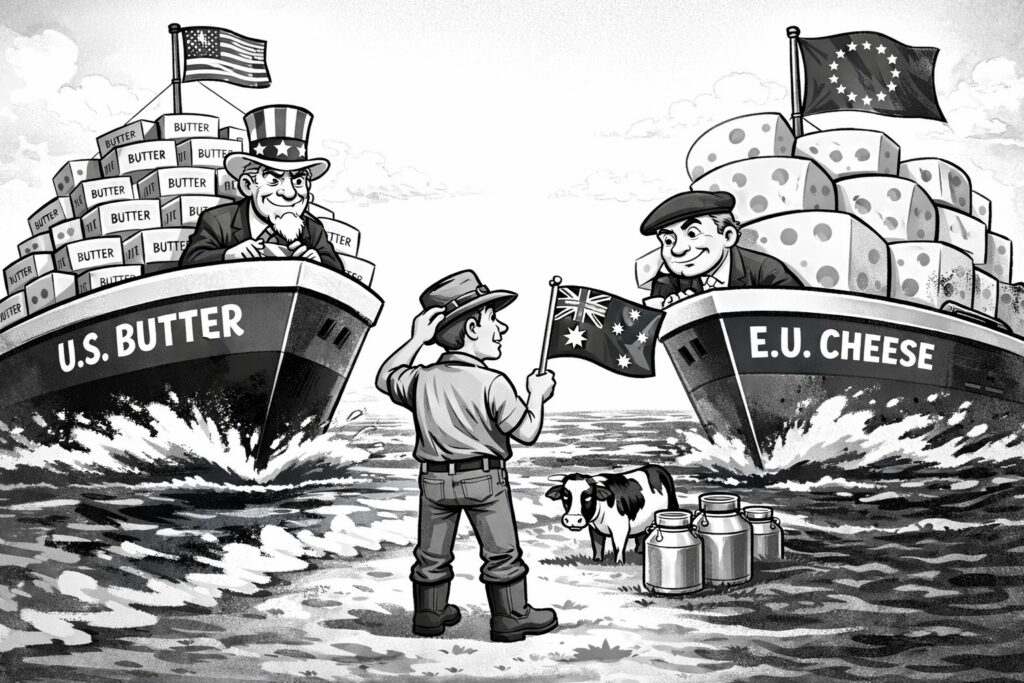
The Australian dairy industry has highlighted serious concerns about deep and lasting consequences for their sector as the Federal Government gears up to sign the Australia-European Union Free Trade Agreement (Australia‑EU FTA).

Australian Dairy Industry Council (ADIC) Chair, Ben Bennett, said it is clear negotiations are effectively complete, but critical dairy outcomes remain unclear and appear heavily weighted in favour of the European Union.

“We think the signing is imminent – the indications we’re getting are that the deal is essentially there,” Mr Bennett said.

Mr Bennett told The Australian the dairy sector once again appears to be left carrying the burden in this agreement, “with more risk, more imports and fewer protections, for very little in return”.

“Dairy is going under the bus, and it’s being driven by Federal Government.”

The industry has warned that the proposed agreement would loosen Australia’s remaining safeguards on European dairy imports, particularly cheese, in a market already exposed to heavily subsidised products from the EU.

Australia currently imports around 80,000 tonnes of dairy from the EU valued at $877.4 million, up almost nine per cent year-on-year, while exporting only around 1,600 tonnes in return valued at $55 million.

“This is not a level playing field,” Mr Bennett said.

“European dairy producers receive tens of billions of dollars in subsidies, yet Australian farmers are being asked to compete without such support.”

ADIC is also concerned about the potential removal of the $1.20 per kilogram tariff on imported cheese, which the industry describes as the last meaningful buffer against a surge of low‑priced European product.

“The risk is not theoretical. The EU is the world’s largest cheese producer by a country mile, and surplus product will inevitably be pushed into markets like Australia if barriers are lowered.”

Beyond imports, the dairy industry remains alarmed by the prospect of Geographical Indications (GIs) restricting the use of long‑established dairy names such as parmesan and feta, which underpin many Australian processing businesses and regional jobs.

ADIC Deputy Chair John Williams said the industry cannot accept an overseas regulatory regime being imposed on Australian businesses through geographical indications.

“Banning long-used names like parmesan and feta would hit local manufacturers, confuse consumers, and deliver no clear benefit to Australia,” Mr Williams said.

“We need safeguards that actually work.”

ADIC reiterated its support for open, rules‑based trade, but said any agreement must deliver genuine, reciprocal outcomes and include effective safeguards to protect local producers from import surges and unfair competition.

“The government must lock in binding, time-bound review mechanisms that assess impacts on dairy and trigger corrective action where harm occurs,” Mr Williams said.

“The government must also pursue compensation gains elsewhere – through accelerated trade opportunities, long-overdue reviews and improvements to existing agreements so dairy is not left carrying the cost of this deal.

“This is bigger than one negotiation. Dairy contributes $18.5 billion to the national economy and supports more than 70,000 jobs, mostly in regional Australia.

“With European Commission President Ursula von der Leyen visiting Australia in the coming weeks, we are ready to work with government in good faith on a deal that is fair, enforceable and future-ready.”

Mr Bennett said free trade agreements must be free and fair.

“The EU wants access to Australia’s market but is unwilling to reciprocate with equal access to the EU for Australia’s exports – this is clearly inequitable and unfair,” Mr Bennett said. “The agreement on the table is a one-way deal that will leave local industry carrying the cost, and that’s something that should not be acceptable to the Federal Government.”

Australia-EU FTA risks dealing a devastating blow to Australian dairy

The Australian Dairy Industry Council (ADIC) is warning an unbalanced Australia-European Union Free Trade Agreement (Australia-EU FTA) will irreparably damage the nation’s dairy industry, undermining farmers, processors and regional communities.

The warning comes as China has imposed provisional tariffs of up to 42.7 per cent on dairy products imported from the European Union (EU), highlighting the willingness of major economies to protect their domestic industries from subsidised imports.

ADIC Chair Ben Bennett said China’s move was a stark reminder that the EU prioritises protection of its own farmers within a highly subsidised agricultural trading system.

“Australia cannot afford to give away its domestic industries and sensitive trade areas for ink on a page and a government announcement opportunity,” Mr Bennett said.

“The Australian dairy industry, and the agricultural sector, stood behind the government walking away from an agreement with the EU in October 2023.

“We continue to believe that no deal is better than a poor deal, and this view has only strengthened as local operating conditions have continued to worsen.

“If Australian negotiators concede to the EU on critical issues such as market access, dairy tariff liberalisation and geographical indications without meaningful return, the damage to our dairy industry will be irreversible.”

The EU dairy industry has the largest offensive interest in the nation’s bilateral trade and floods the Australian domestic market with more than 71,000 tonnes of subsidised dairy product each year (valued at AU$740 million) – compared to just 1,600 tonnes that Australia exports to the EU (valued at AU$55 million).

ADIC Vice-Chair John Williams said the figures demonstrate why Australia must not weaken protections for its domestic market under an Australia-EU FTA.

“Australian dairy is world-class, but our domestic competitiveness is being eroded by increased import penetration and an uneven global playing field,” Mr Williams said.

“Opening the door wider to subsidised EU dairy without reciprocal outcomes would push more Australian-made products off supermarket shelves.”

China’s provisional duties – ranging between about 21.9 per cent and 42.7 per cent – target milk, cheese and other dairy products and reflect concerns that subsidised EU exports can harm domestic industries.

“China’s actions show that even large trading partners will defend their dairy industries when faced with unfair competition,” Mr Bennett said.

“This should be a clear signal to Australian negotiators that protecting our dairy farmers and processors must come first.”.

Mr Williams said protecting Australian dairy was about more than trade volumes.

“Every litre of Australian milk and every locally made cheese, yoghurt or butter represents regional jobs, economic value and national food security,” he said.

“Trade agreements must strengthen Australian dairy – not accelerate a shift towards imported product at the expense of local farmers and processors.”

Australia’s dairy sector has operated for decades in a highly competitive global market.

But the EU’s agricultural policies provide significant direct support to European farmers, allowing subsidised dairy products to be exported into markets like Australia – a competitive advantage Australian farmers do not receive.

“Australians want to choose Aussie dairy, but government policy must back that choice,” Mr Bennett said.

“That means standing up for Australian dairy in trade negotiations and ensuring our market is not undermined by a surge of subsidised imports.”

ADIC calls on the Federal Government to:

  • Ensure any Australia-EU FTA delivers genuinely reciprocal market access for Australian dairy exports.
  • Protect the Australian domestic market from a surge of subsidised EU dairy imports.
  • Reject any proposals that remove safeguards without equivalent concessions for Australian dairy producers.

“We stand ready to work with government to ensure the Australian dairy sector is appropriately represented in the finalisation of any trade negotiations with the EU,” Mr Bennett said.

Photo by Katrin Leinfellner on Unsplash

New Research: Water buybacks pose critical risk to Australia’s dairy industry

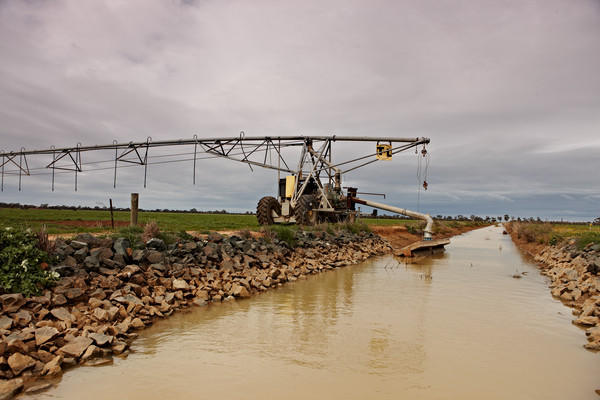
The Australian dairy industry and dairy communities face a severe and disproportionate threat from continued water buybacks under the Murray-Darling Basin Plan, new research has found.

The independent, evidence-based analysis is the first of its kind to focus on dairy and the implications across the supply chain.

Conducted by global consultancy Ricardo, it confirms the industry’s concerns: water buybacks aren’t just a policy lever. They are an indiscriminate force with far-reaching economic and social consequences.

Australian Dairy Industry Council (ADIC) Chair Ben Bennett said the modelling presented two realistic buyback scenarios – returning 302GL or 683GL of water – both of which would cause irreversible damage to dairy farmers, dairy processors and dairy communities.

“The report has found buybacks would reduce the consumptive water pool by seven to 16 per cent, pushing water allocation prices up by 17 to 40 per cent, especially during dry years,” Mr Bennett said.

“These higher input costs, for water and feed, severely erode farm profitability, particularly for those with low water entitlement ownership.

“Under extreme dry conditions, like we are seeing now in parts of the southern basin, some dairy farms could experience financial losses of up to 535 per cent, or more than $430,000 in a single year.”

The modelling also shows a reduction in milk production of three to 15 per cent – translating to a loss of 60 to 270 million litres annually.

ADIC Deputy Chair John Williams said the impact of this on dairy processors revenue was modelled at up to $545 million each year.

“Reduced milk supply exacerbates existing overcapacity, leading to higher unit costs, greater competition for milk, rising transport costs, and a higher risk of plant closures,” Mr Williams said

“The effects from dairy farm and processor spending cuts flow right through rural communities, particularly to rural suppliers and service providers, threatening local jobs, business viability, and the broader regional economy.”

The ADIC is calling on the Australian Government to immediately halt further buybacks and instead implement a smarter, more balanced water recovery plan that strikes the right balance between environmental outcomes, food production and the long-term resilience of regional community.

“A whole-of-industry and government approach is critical to safeguarding the future of Australian dairy, and the communities and businesses that rely on it,” Mr Bennett said.

Read the full report here and view the fact sheet here.

Mulvany honoured with ADIC Outstanding Service Award

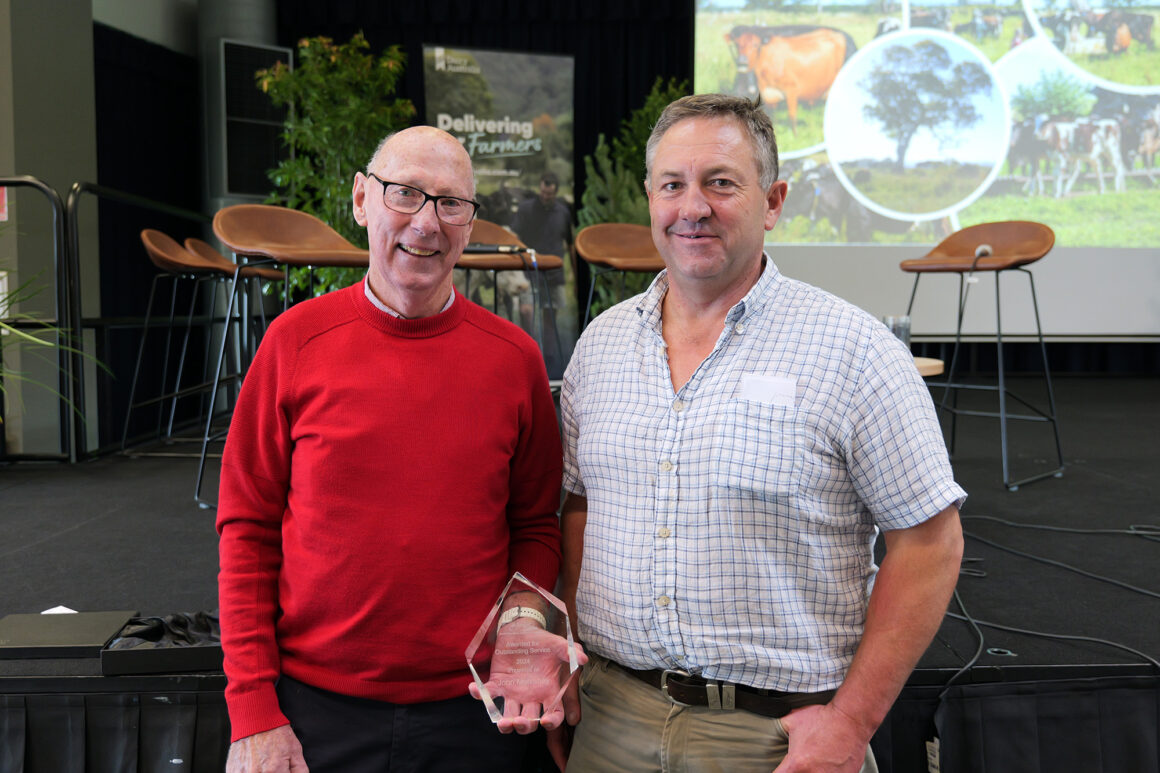
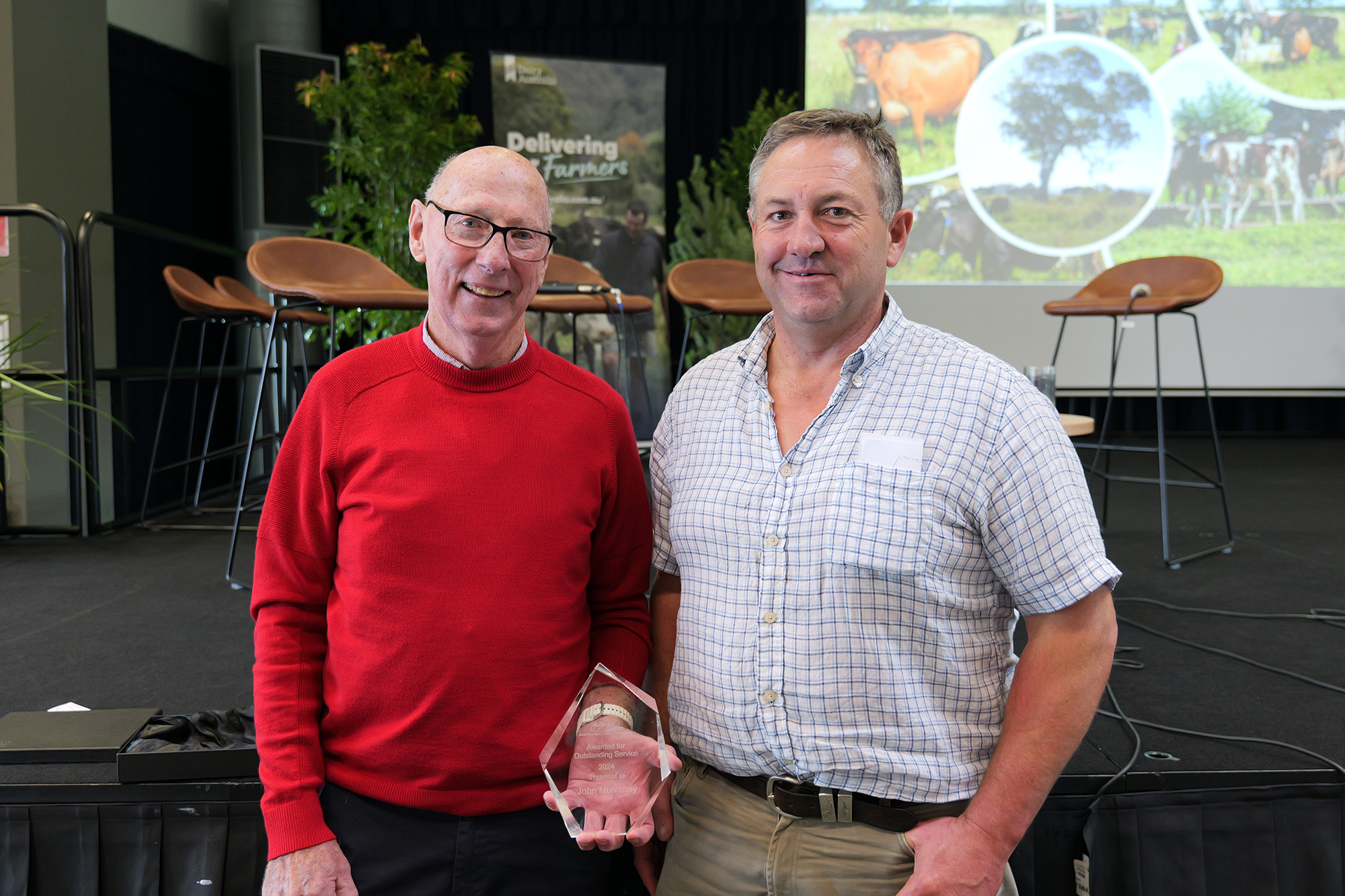
The Australian Dairy Industry Council (ADIC) is proud to announce respected dairy consultant John Mulvany has been awarded the prestigious 2024 ADIC Outstanding Service Award.

The accolade recognises his exceptional leadership, dedication, and significant contributions to the Australian dairy industry over three decades.

ADIC Chair, Ben Bennett said Mr Mulvany became known for an unwavering commitment to developing profitable and resilient farming practices and ensuring better outcomes for his clients.

“John took a holistic approach in working towards better outcomes for dairy farmers,” Mr Bennett said.

“He’s worked with farmers and farm businesses of all sizes across the country, helping achieve their dreams and improve their operations.

“Most would agree he brought wit, humour and a strong focus in his approach to consulting.”

Mr Bennett said Mr Mulvany’s contributions extend beyond individual consultations. He has authored thought-provoking articles, developed industry benchmarks, and introduced innovative concepts.

Mr Mulvany received a standing ovation when he accepted the award at the GippsDairy Muster in Churchill on Wednesday.

He thanked his family, mentors and many industry organisations in his acceptance speech.

If you know of someone who has made a significant contribution to the dairy industry, consider nominating them for the 2025 award. More detail on the applications process will be announced in due course.

Dairy raises alarm on industry regulator’s future

MEDIA RELEASE
Wednesday, 18 December 2024

The peak national representative body for the Australian dairy industry is concerned the Victorian Government’s move to merge the state’s dairy food safety regulator puts the multi-billion dollar industry at risk.

The proposed reforms – part of a broader strategy to halve the number of business regulators by 2030 – would consolidate Dairy Food Safety Victoria (DFSV) with PrimeSafe, Agriculture Victoria and some Department of Health functions.

The Australian Dairy Industry Council (ADIC) argues this move could threaten decades of specialised, trusted food safety oversight in Victoria underpinning the state’s production of 63 per cent of the national milk pool.

ADIC Chair Ben Bennett said DFSV was a self-funded, stand-alone, cost recovery organisation, that did not cost taxpayers, while delivering huge value to dairy farmers and processors across the state.

“Unlike other food regulators, DFSV licenses thousands of dairy farmers across the state as well as dairy food processors,” Mr Bennett said.

Mr Bennett said ADIC would seek clarification from the Victorian Government on how it sees value in consolidating DFSV with the other organisations.

“Importantly, we want to understand how the government intends to do this without putting industry quality control, compliance, and consumer food safety at risk,” he said.

“ADIC is also concerned that a prominent driver of innovation would be removed from the industry, with DFSV having developed respected initiatives like the Dairy RegTech project, which enhances efficiency and compliance across the sector.

“We’re also concerned DFSV’s respected approach of industry-specific consultation informing regulatory measures could be placed on the chopping block.

“We call on the government to recognise the irreplaceable value DFSV provides to the Victorian dairy industry, maintain its role as an independent regulator focused on dairy food safety, and ensure farmers and processors have meaningful opportunity to influence the proposed changes.”

ADIC urged the government to reconsider its approach and invites further discussions to address these concerns.

ADIC deputy chair John Williams said DFSV’s success stems from its deep understanding of the multi-billion dollar industry.

Without this specialised focus, ADIC Deputy Chair John Williams said the unique needs of dairy farmers and processors could be overlooked and ADIC feared this could lead to weakened confidence in the food safety system.

“Victoria’s dairy industry is built on a foundation of trust, safety and quality,” Mr Williams said.

“We cannot afford to jeopardise the standards that ensure Victorian dairy products are among the safest and most sought after in the world.”

Mr Bennett pointed out the proposal could lead to on-farm audits being conducted by inspectors unfamiliar with the nuances of dairy operations, creating uncertainty and inefficiencies for farmers and processors.

“The Victorian dairy industry deserves a regulatory body that understands its challenges and opportunities,” Mr Bennett said.

“We call on the Victorian Government to remove DFSV from the proposal and safeguard the innovative and effective frameworks it has established.”

Dairy cows in a field

Statement on the use of Bovaer in dairy

The subject of Bovaer, a supplement that reduces methane emissions from cattle, has recently gained attention in Australian media.

Bovaer, a DSM Firmenich product, has been extensively researched internationally for more than a decade.

As of now, Bovaer has not been used on Australian dairy farms.

The supplement works by inhibiting a specific enzyme in a cow’s stomach, effectively reducing methane emissions. It is made from naturally occurring ingredients – nitrates present in grasses and alcohols naturally found in a cow’s rumen – and is broken down during the cow’s normal digestive process. The cows fully metabolise the product and it does not appear in milk or meat.

The Australian dairy industry operates under strict regulations to protect public health.

Australia’s dairy industry supports the development of technologies that help address carbon emissions whilst also maintaining Australia’s stringent standards for animal welfare and human safety.

The Australian dairy industry is deeply committed to sustainability and has made significant progress in reducing emissions, including a target to lower emissions intensity by 30% by 2030. The industry will continue to prioritise sustainability, food safety, and public health in every aspect of its operations, working towards a more sustainable future for all.

Bovaer has been approved for use in 68 countries, including by the European Food Safety Authority and for beef by the Canadian Food Inspection Agency. These regulatory bodies have deemed it safe for animals, their handlers, and consumers.

For media enquiries please call +61 3 9607 1399.

High hopes for more Aussie dairy in UAE with new trade deal

The dairy industry has welcomed Australia’s new bilateral trade agreement with the United Arab Emirates (UAE), with high hopes it’ll lead to an uptick in exports to the region.

Australia’s peak dairy industry representative body – the Australian Dairy Industry Council (ADIC) – supported the push for a trade agreement with the UAE.

“Today’s announcement by the Minister for Trade, Don Farrell, represents a strong opportunity in an important export market for Australian dairy,” ADIC Chair, Ben Bennett said.

“We congratulate Minister Farrell on the announcement, which we hope leads to improved market access for our product.

“We understand this agreement will mean more agreeable trading conditions between the two countries and look forward to seeing the detail on what that looks like for dairy.”

ADIC deputy chair, John Williams, said the UAE was Australia’s largest trade and investment partner in the Middle East.

“Through the Comprehensive Economic Partnership Agreement (CEPA), Australia gains an advantage in trade with the major players in the Gulf Cooperation Council (GCC) countries.

“The GCC countries collectively import approximately 900,000 tonnes of dairy product annually.

“As a combined market it’s one of the largest dairy import markets globally, roughly equivalent in size to large economies like the United Kingdom.”

“Australia is a relatively minor supplier of dairy products to the GCC region, though this has not always been the case. This agreement is bound to help Australian dairy’s competitiveness.”

ADIC looks forward to the agreement being signed next month and the real benefits this will create for the Australian dairy industry.

Richardson honoured with Outstanding Service Award

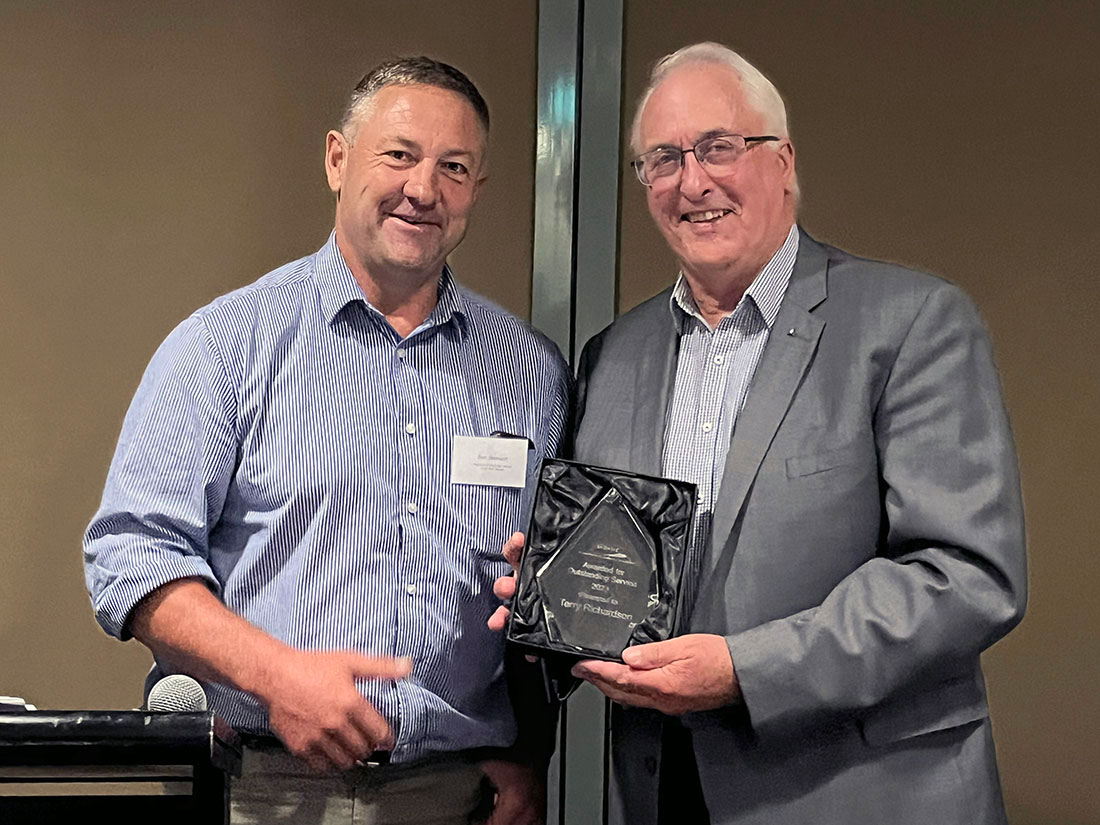
ADIC chair, Ben Bennett, presents the 2023 Pat Rowley Outstanding Service Award to Terry Richardson.

Former Australian Dairy Farmers (ADF) president and Warrnambool Cheese & Butter chair, Terry Richardson, has received the Australian Dairy Industry Council’s (ADIC) 2023 Pat Rowley Outstanding Service Award.

This prestigious accolade recognises Terry’s exceptional contributions and dedication to the dairy industry throughout his career.

Having moved from New Zealand to Australia in the early 2000s, Terry’s commitment to the dairy community spans four decades and two countries.

Terry became a member of the United Dairyfarmers of Victoria (UDV) Colac branch in 2004, before being appointed to the board of Warrnambool Cheese & Butter in 2007. He later joined the ADF board in 2011 and served as ADF president and ADIC chair from 2017 to 2021.

Current ADIC chair, Ben Bennett, presented the award to Terry at a function in Melbourne on Tuesday night. Ben said Terry spearheaded pivotal initiatives aimed at fostering innovation, sustainability, and prosperity within the industry.

“Terry was heavily involved in crafting the Australian Dairy Plan and was instrumental in overseeing the introduction of the Dairy Code of Conduct,” Ben said.

“With a passionate belief that the dairy industry holds an important place in Australian society, he has consistently gone above and beyond the call of duty to grow and promote dairy’s valuable contribution to Australian communities.”

ADIC deputy chair, John Williams, said Terry was a “true leader” and “statesman”.

“As ADIC chair, Terry never lost sight of the target and what was in the best interest of the whole industry,” John said.

“He could deal with a myriad of personalities and provide a selfless rationale and steady influence in the face of individual self-interests.

“It is for this reason Terry is a well-deserving recipient of the Pat Rowley award.”

ADIC welcomes Minister Watt’s call for strong, united industry

Dairy leaders have welcomed recognition from federal Agriculture Minister Murray Watt on Friday (22 March) of the critical importance of the dairy industry’s contribution to Australia.

Speaking at the government-hosted National Dairy Symposium in Melbourne, Minister Watt highlighted the government’s commitment to supporting the $17 billion Australian dairy sector.

“Dairy is Australia’s third largest agricultural industry, and we will continue to do everything we can to support Australian dairy producers and processors, even when that means making tough decisions,” Minister Watt said, referencing the Government’s decision to walk away from the EU trade deal.

The symposium, which was a pledge by the Government at the last federal election, tackled issues facing the industry, including productivity and growth, and sustainability and climate.

ADIC Chair Ben Bennett said the industry was heartened by the Minister’s support. “Statistics show dairy is a product of choice for Australian consumers, and indeed for many international markets,” Mr Bennett said.

“Every one of the industry’s current challenges presents an opportunity and on Friday, our industry made an important step to working together to drive positive change,” Mr Bennett said.

“Now, following the symposium, it’s important that government and industry chart a path forward that ensures the resilience, viability, and prosperity of Australian dairy for generations to come.”

ADIC Deputy Chair John Williams said the Minister’s announcement to commit funds to Dairy Australia to conduct workshops to explore the productivity challenge was fantastic news for an industry that is crucial to the economy and regional communities.

“We truly believe there are strong opportunities for profitable growth in the Australian dairy processing sector, with a stable domestic market and growing global demand for high quality dairy products,” Mr Williams said.

“Our goal is to secure a strong, vibrant Australian dairy industry and to keep dairy manufacturing local and we’re committed to doing everything we can to make this happen.”

Dairy industry disappointed, call for MDB ag industry advisory group

Dairy leaders say an agricultural industry advisory group must be established for the implementation of the Murray-Darling Basin (MDB) Plan to ensure the livelihood of dairy farmers, processors and communities.

Australian Dairy Industry Council Chair Rick Gladigau and Deputy Chair John Williams met with the Federal Minister for Environment and Water Tanya Plibersek in Canberra yesterday, on the same day the Federal Government got the Senate support it needed to pass the Restoring our Rivers Bill.

“We expressed our significant concerns to the Minister about the Bill and the risks it poses to our industry, our farmers, and our regional communities,” Mr Gladigau said. “All at a time when milk production is at an industry 30-year low.

“We also sought details on the new amendments to the Bill that were passed and made it clear that the government must now genuinely engage with dairy farmers, processors and communities to ensure they are not destroyed in this process.”

The Bill passed the Senate with minor amendments that included a consideration of socio-economic impacts and options to lease water for the environment.

“We proposed to the Minister establishing an agricultural industry advisory group so that government genuinely engages with industry in the implementation and roll out of the new legislation.

“The group would endeavour to minimise negative impacts of buybacks by ensuring ongoing government accountability including the consideration and reporting of socio-economic impacts. Also, by ensuring that “all options are on the table” as the Minister has said, not only buybacks and to provide input into these options. Further, to provide input into the inevitable community assistance packages that will be required from structural change as a result of buybacks.”

Twenty per cent of the nation’s total milk production comes from the Murray Darling Basin region. It is home to 912 farms and 42 dairy processing facilities, creating almost 7000 jobs and generating about $2 billion of value to the region and local communities.

Mr Gladigau said since the introduction of the MDB Plan in 2012, dairy farm numbers in the region had fallen by 47 per cent and raw milk production dropped by 35 per cent.

Mr Williams said: “It’s so important we have an industry advisory group to consider the application of socio-economic considerations, the workings of community assistance packages and alternative measures to buybacks.

“Every day, dairy processors are fighting to ensure the continuation of the decline in milk production does not continue.

“Dairy processors are feeling the pressure to remain profitable, to maintain jobs for workers and keep the doors open,” he said. “Many are at breaking point and unsound water reform could be the final push.

“To put it simply, less water means less milk production. Less milk production means less processing. Less processing means less jobs and less Australian dairy products. All this increases food costs at a time when consumers are struggling through significant inflationary pressures.”

“We understand and support the need to provide water for the environment, we must also protect the livelihoods of local communities, the dairy industry and our processors.”

While in Canberra, Mr Gladigau and Mr Williams, accompanied by Australian Dairy Products Federation Executive Director Janine Waller and Australian Dairy Farmers CEO Stephen Sheridan, also met with Assistant Minister for Manufacturing Tim Ayres, Shadow Minister for Water Perin Davey and the Prime Minister’s office.

Australian dairy backs Farrell walking away from EU FTA

Australia’s dairy industry has backed Trade Minister Don Farrell in walking away from a trade deal with the European Union (EU) that would have hurt the Australian dairy industry.

Australian Dairy Industry Council (ADIC) chair Rick Gladigau and deputy chair John Williams are in Osaka, Japan, representing dairy’s interests during the talks.

Mr Gladigau said the industry has consistently reinforced that a free trade agreement (FTA) with the EU was never going to deliver a positive outcome for dairy.

“Australian dairy welcomes the Minister’s decision not to conclude a deal and walk away.

“Despite the best efforts of the Australian Government, the EU has continued to make unreasonable demands by insisting Australia adopt an anti-competitive Geographical Indications (GI) regime while at the same time resisting to provide equitable market access into the EU dairy market.”

Already, 70,000 tonnes of European dairy products are imported to Australia each year, compared to just 500 tonnes of Australian exports to the EU.

ADIC deputy chair John Williams said an FTA with the EU offered no gains for Aussie dairy, just costs and burdens. For dairy, no deal was better than an inequitable deal.

“We thank Minister Farrell for not blinking at the 11th hour and having the fortitude to walk away in the face of the EU maintaining its unreasonable position.

“This is especially important as the industry battles increasing cost of production, a flood of cheap imports and the lowest milk pool in 30 years.”

Says Mr Gladigau; “ADIC truly recognises the efforts made by the Minister and the negotiation teams at the Department of Foreign Affairs and Trade and Department of Agriculture, Fisheries and Forestry over the five years of negotiations.

“The complexities being faced by dairy in these negotiations have been well recognised as an enormous challenge and ADIC has appreciated the Government’s regular communication and consultation on the critical issues associated with the A-EUFTA.”

(ends)

1 2 3 11 12