Category

Uncategorized

Home / Uncategorized
Uncategorized

Skilled migrant labour vital for dairy

It isn’t easy being a dairy farmer. A lot of people think we just milk cows all day, but the reality is farmers need a wide range of skills to manage a
sustainable farm business.

In fact, the National Centre for Dairy Education estimated that dairy farmers need over 170 different skills to run a successful farm business.

Apart from milking, farmers have to feed livestock, make hay and silage, operate machinery, protect waterways, manage milk quality assurance and supervise
staff.

It really is a skilled profession, and one that rarely gets the credit it deserves. This is underscored by the crippling skills shortage that the industry
continues to face.

To this end, we rely on our political representatives to address the problem. Unfortunately, there is still a misapprehension from some in Canberra
that farming is an unskilled industry which should be able to source labour from the pool of unemployed in regional areas.

Reality again is different. The local labour just doesn’t exist, and many dairy employers rely on skilled migrants brought to Australia under subclass
457 visas to fill core on-farm roles. Many farmers even consider overseas workers to be integral to their long-term business strategy.

The dairy industry has found the 457 visa very useful. It has enabled us to recruit skilled workers from overseas for farm management roles. And it
has also given these workers a pathway to permanent residency. Everybody wins.

We were struck a blow when the 457 visa was abolished and replaced from March this year by the Temporary Skill Shortage visa, a scheme that operates
in two streams – for short-term labour for up to two years with the option of a two-year renewal, and for medium-term labour for up to four years.
Only the second stream offers the possibility of permanent residency.

Industries eligible under each stream is determined by the Regional Occupations List. Dairy farming is currently listed as a short-term skill, which
will only hamper our ability to use the scheme because the prospect of permanent residency is an important factor in attracting skilled overseas
workers.

It should be clear to even casual onlookers that agricultural industries are not just facing a “temporary” skills shortage. This is a problem we have
been battling for years and one that will only grow worse unless it is addressed now.

It is strange that dairy farming has remained on the Regional Occupations List yet has not been placed on the Medium Labour TSS.

One concern is that dairy farming could be wiped from the list entirely when the list is reviewed in July. We can’t let that happen and advocates in
the industry – including Australian Dairy Farmers and Dairy Australia – are working to ensure farmers’ voices remain strong on this issue.

It is vital that while the skills shortage persists, dairy farmers remain on the Regional Occupations List and that the federal Government take immediate
action to allow skilled overseas workers to gain longer visas and a pathway to permanent residency.

Given the size of the dairy industry it will take considerable time to correct the documented skills shortage with suitably qualified Australian workers.

In the meantime, dairy farmers will continue to struggle to staff their businesses with skilled workers and need to have reliable access to skilled
overseas workers.

Let’s not forget that farmers are not the only people who stand to benefit from allowing skilled overseas workers opportunities in Australia. A recent
report into the rural workforce found that immigrant farmers not only fill labour shortages, but they also bring with them new technological insights
gained overseas to apply to Australian farming, providing a valuable contribution to regional Australia.

As the Regional Occupations List comes under review, this insight hopefully provides our decision-makers with food for thought and an urgent lifeline
to an industry that still faces a critical shortage of skilled labour.

Uncategorized

Dairy Bio – A day on the green

The ability to access new technologies is essential for dairy farmers to keep
the cost of production down.

DairyBio CRC and DataGene are two organisations that are steadily delivering solutions for the dairy industry in the fields of animal health, fertility, herd improvements and
genetics.

Australian Dairy Farmers (ADF) and the Australian Dairy Products Federation recently attended the Dairy Bio CRC Open Day in Hamilton, Victoria. More than
150 dairy and livestock farmers, and service providers from all over Australia attended the Open Day to view how research programs are changing the
way dairy farmers innovate on-farm.

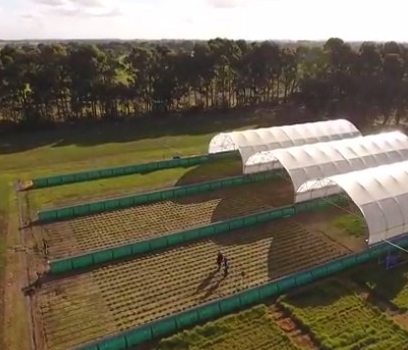
Hamilton’s Agriculture Victoria research farm is the site where all the large-scale, field-based pasture activities are located for DairyBio, and it is
the best place to see how innovations will deliver game-changing increases in pasture yield, persistence and quality.

Throughout the day we were informed of the world’s largest precision-planted ryegrass filed trial, viewed drones and ground vehicles with advanced sensor
technologies, walked through glasshouse facilities with the latest forage innovations and shown drought-tolerance trials which could be a game-changer
for farmers in the future.

One of DairyBio CRC’s major achievements is the invention of a hybrid technique for ryegrass breeding. This will unlock a 20 per cent yield advantage in
hybrid ryegrass varieties and also make it easier for plant breeders to use genomic selection and add novel endophytes in new pasture varieties. The
current modeling suggests that hybrid ryegrass could deliver a benefit of $300 per hectare to Australian dairy farmers.

These viable solutions are a great example of how industry and research sectors work together to deliver some of the most positive and permanent changes
to dairy herds and dairy pastures.

ADF recognises the potential productivity benefits of these new technologies and the need to innovate to compete on the global stage. The adoption of these
technologies is going to become increasingly important to help farmers remain profitable, improve natural resource use and facilitate adaptation to
ongoing business pressures.

The Australian dairy industry has achieved considerable improvements in farm productivity through the adoption of new technology and will continue to find
new ways to be more efficient, and environmentally sustainable while still remaining profitable over the long term.

David Inall

ADF Chief Executive Officer

Uncategorized

Expressions of Interest Open for the ADF Board

Nominations for three Business Director positions and an Independent Director on the
Australian Dairy Farmers’ (ADF) Board opened today.

ADF is calling on its members to nominate eligible candidates for three Business Director positions and an Independent Director position.

ADF President, Terry Richardson said that we are looking for dairy farmers who are passionate about advancing dairy farming in Australia and have a strong
industry commitment.

“The maximum term a Business Director may serve is three years without submitting for re-election and an Independent Director may serve two years without
submitting for re-election,” said Mr Richardson.

ADF currently has two Business Directors who were elected at the 2014 AGM for a three (3) year term, these Directors must retire and may nominate for re-election.

Additionally, following the retirement of a past President in February, a temporary Business Director was appointed in May 2017 to fill the casual vacancy.
As required by the constitution, the Business Director must retire and may nominate for re-election.

The Independent Director was elected in November 2015 for a two-year term and must retire, however may seek to be re-appointed for another term.

Director elections will take place at the ADF’s next Annual General Meeting on Thursday 24 November, 2017.

The eligibility criteria for the position of Business Director are:

• Must be in the business of dairy farming

• Must be a member of Australian Dairy Farmers Limited; and

• Must be eligible under clause 4.2.2 of the ADF Constitution (no more than two Business Directors from any one state)

If you wish to receive a nomination form or position description please contact the ADF Office via (03) 8621 4200 or email operations@australiandairyfarmers.com.au.

Applications close midday (AEST) Thursday 28 September 2017.

Terry Richardson

ADF President

Uncategorized

Advancing Dairy Farming

Starting a new job (adventure) is sometimes difficult, particularly after a crisis.

Over the last couple of months, I have had the opportunity to sit down and discuss many of the issues that the dairy industry has faced.

Last year was an extremely challenging time in the world of dairy, both internationally and domestically.

Many farmers were hit by late season farmgate step-downs, which came after a difficult season due to dry conditions and increased input costs.The lack
of demand and oversupply of dairy worldwide caused prices to crash which left many farmers with significant debt.

No doubt it will take the industry a long time to recover, not just financially but emotionally as well.

Now, when some dairy farmers may still be questioning their future I challenge all within the dairy industry to work with each other in collaboration to
show our farmers what we can provide for their future.

The future of dairy must become exciting and rewarding. It needs to be driven by smart business decisions, strong leadership and the willingness to work
through our differences to get the job done.

This will not happen by accident, rather through visionary people working across the whole supply chain.

We realise that some dairy farmers have reached a ‘fork in the road’ and are looking for immediate answers. It would be wrong of us to say we had all the
answers, which we don’t.

Let’s get our collective efforts behind something we can do in partnership for our industry.

Advancing dairy farming is our top priority.

David Inall

ADF Chief Executive Officer

Uncategorized

Federal Senate Passes the Effects Test

On August 14, legislation passed in the Federal Senate that will help level the
playing field for small businesses, including farm businesses.

Included in section 46 of the Competition and Consumer Act 2010, the misuse of market power provision will help address the current unequal distribution
of market power and encourage transparency to the benefit of producers, consumers, and retailers.

This tool will make available to regulators the capacity to judge whether a company is acting to unfairly reduce competition, regardless of intent. It
allows them to look at both the actual and likely impact on a market.

Small Business Minister, Michael McCormack said a fairer playing field is a big issue raised by small business people.

“From farmers to small supermarkets, from consumers to suppliers, many Australians tell me how these changes will stop firms with substantial market power
from engaging in conduct which reduces competition”, said Mr McCormack.

The effects test, as an additional tool for the ACCC, will address issues where a company with a considerable degree of power may be engaging in conduct
that pushes out smaller businesses or forces them into devaluing their product with lower prices.

With the potential for use in examining the business practices of the large supermarkets in Australia, the effects test could determine their impact on
a market and influence the development and marketing of products such as $1 per litre milk, and $6 kg cheese for example. Milk products at these prices
are unsustainable for all involved and the predatory pricing tactic has seen hundreds of millions of dollars lost from the dairy value chain.

Australian Dairy Farmers (ADF) has advocated strongly for this change since 2011. We believe the effects test will assist in preventing damaging practices,
including predatory pricing in future.

The introduction of an effects test is in line with competition policy around the world – Australia will be joining the clear majority of nations in the
Organization for Economic Cooperation and Development (OECD) who already have established effects tests.

The effects test is another tool to help provide integrity and transparency regarding the impact of retailer actions on suppliers.

These reforms will support consumers’ interests as well as dairy farmers by moving towards a more objective measure to assess the impact of anti-competitive
behaviour.

ADF would like to thank the Government and in particular the National Party, the Prime Minister, Deputy Prime Minister, the Treasurer, the Minister for
Small Business for their support and action on this important reform.

We also want to thank the Queensland Dairy Farmers Organisation and other state dairy farmer organisations for their tireless work in highlighting the
issues within the industry and working with us on this important reform.

David Inall

ADF CEO

Uncategorized

Happy 75th Anniversary ADF

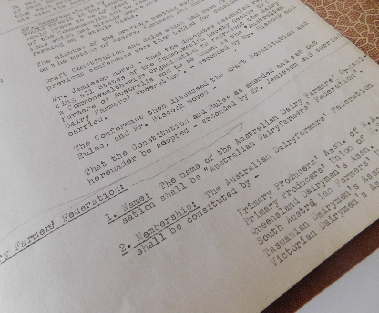
On Wednesday 29 July 1942, the Australian Dairyfarmers’ Federation held their annual
meeting at the offices of the Victorian Dairymen’s Association in Collins Street, Melbourne.

During the meeting, one thing was certain and that was the need to bring together the different organisations and to unify the often-conflicting agendas
both at a state and national level.

Delegates from all over Australia came together to discuss the formation of an organisation that would represent the national interests of dairy farmers.

The result was the establishment of Australian Dairy Farmers’ Federation (ADFF) whose major objective was the promotion of dairy farming in the Australian
dairy industry and its place in the Australian economy.

Other than a variation in name, Australian Dairy Farmers’ (ADF) has for the past 75 years represented the interests of dairy farmers. Our organisation’s
mission is to provide strong leadership and representation for the continued growth of internationally competitive, innovative and sustainable dairy
farm businesses.

The milestones and achievements that have punctuated ADF’s rich history have been significant – not only due to the staff but largely the dairy farmers
who have contributed their time and knowledge throughout the years. Their important contribution has resulted in a strong, progressive and sustainable
industry representative of economic progress, environmental sustainability, and improved social well-being.

Now more than ever, it is essential that ADF continues to speak for dairy farmers with a unified voice.

ADF is committed to representing dairy farmers by communicating their needs to government in the areas of animal health and welfare; farming systems and
herd improvements; market, trade and values chain; natural resources; people and human capacity; and research and development.

To ensure the voice of dairy is heard, we will continue to seek government support and are committed to driving innovation, productivity, and profitability.

Our advocacy and policy work is at the heart of everything we do and is essential to ensuring Australian dairy remains competitive and well aligned for
growth.

Terry Richardson

Interim ADF President

Uncategorized

Occupation lists offer mixed outcomes for dairy

The dairy industry has
received mixed outcomes from the Government’s 1 July amendments to the skilled occupation lists announced as part of the 457 visa reforms.

The Government’s decision in April to change the skilled occupation lists used to employ 457s and other permanent visas, introduce a Skilling Australians
Fund levy and put the Dairy Industry Template Labour Agreement under review, immediately affected dairy farmers and processors’ ability to hire overseas
staff.

The changes are being implemented in stages and the Australian Dairy Industry Council (ADIC) has been there every step of the way trying to lessen the
impact.

ADIC has been engaging in consultations with the Department of Immigration and Border Protection, lobbying relevant ministers and raising our concerns
with the Department of Agriculture and Water Resources about the impacts of these changes on the dairy sector.

We have also partnered with the National Farmers Federation and other commodities to present a united agriculture view.

On 1 July we learnt that our meetings, letters and submissions have had some impact.

Five occupations in the processing sector have been reinstated to the occupation lists, including Food Technologist – a highly specialised occupation which
processors have been unable to fill with local candidates.

There is still more work to be done.

The 1 July changes confirmed that ‘Dairy Cattle Farmers’ can only be employed for two years (with capacity for renewal onshore once only), with no pathway
to permanent residency. The announcement also confirmed the requirement for contributions to be paid to the Skilling Australian’s Fund, a levy which
could increase the cost of hiring 457s.

We are also frustrated that after initially being told our Labour Agreement would remain unchanged, we were later informed that labour market testing had
increased from six to 12 months and processing times had been extended from three to six months.

The dairy industry relies on overseas workers to fill labour shortage gaps in our $13.7 billion industry. Despite ongoing investment in upskilling and
training local people, demand continues to outstrip supply.

We must have the right policy settings in place to allow dairy farmers and processors to hire the people that they need to fill crucial roles.

ADIC will continue to make sure dairy’s voice is being heard as these visa reforms become finalised by March 2018.

By Terry Richardson

ADIC Chair

Uncategorized

Opening Price vs Market Price

Over the past week, we have seen several milk supply companies announce their opening
milk prices for 2017-18. While there will always be some variances in the opening prices for different companies this price generally reinforces the
relative strength of market price improvement.

Further reinforced by Dairy Australia in their recent Situation and Outlook report, the improved outlook for 2017-18 offers sustainably better
returns with indicative prices for the year approaching $6 /kg ms.

Bega and Warrnambool both stated their opening price of $5.50/kg ms. Over the years both companies have been very consistent with their prices reflecting
the world market, and their farmer suppliers have been paid accordingly. We can be confident that the opening prices of both Bega and Warrnambool reflect
the steady upward improvements we have seen in world market prices over the past 6 months.

This week we also saw the release of Fonterra’s opening price for the coming year at $5.30 /kg ms, which is Fonterra’s true interpretation of the market
price and reinforces the variances in opening prices between companies.

A short while ago Fonterra announced it was going to pay an additional 40 cents/kg ms to all its suppliers for the 2017-18 year to account for the step-down
and claw back it applied to its suppliers last year.

While most Fonterra suppliers welcomed this news, there has always been concern that the 40 cents compensation payment would be marketed as part of their
price for the 2017-18 year.

In a recent meeting with Fonterra, ADF was assured the 40 cents would be defined as a payment on top of their market price for 2017-18 and not actually
part of the price. ADF was concerned that this compensation payment if marketed as part of their opening price to farmers, could be used to give Fonterra
a perceived unfair advantage over all other companies.

We believe that companies who did the right thing by their suppliers for the 2015-16 year should not be accused of lagging behind Fonterra’s price for
2017-18. The announcement of the additional 40 cents as compensation was for the major step downs and clawbacks Fonterra applied to their suppliers
during May 2016.

So, it was with considerable disappointment that we saw Fonterra’s announcement of their opening price and the supporting media release from Bonlac Supply
Company. In their communications, they portrayed their opening price to incorporate the 40 cents to make the price $5.70 /kg ms, which makes them look
like they are 20 cents/kg ms ahead of the competition.

Not only is this unfair to other companies which are above the Fonterra announced $5.30 opening market price, but it is also misleading to all their suppliers.
It is a fact that the 40 cents/kg ms to be paid to all Fonterra suppliers this year is a compensation payment for 2015-16 – and should not, at any
time, be characterised as part of the market price for 2017-18.

This past year, ADF and our state member organisations have worked in collaboration with companies to develop a Code of Practice on Contractual Arrangements.
Most of the dairy companies participated in the development of the Code and agreed that one of the most important elements of the Code was the need
for greater transparency in pricing for farmers.

By monitoring the application of the Code with farmers, we will be able to assess whether companies are conforming to the transparency principals outlined
within the Code of Practice.

There is a real danger that Fonterra’s current characterisation of the 40 cents/kg ms being added to their market price for the year will give the wrong
signal to all farmers and other companies that transparency only goes a small way.

It is important that all dairy companies remain fair and transparent in their pricing. The inconsistencies have indicated Fonterra and BSC are not being
completely transparent with their suppliers. These types of contradictions are nothing but misleading at a time when the dairy industry has committed
to rebuilding trust along the supply chain.

John McQueen

Interim ADF Chief Executive Officer

Uncategorized

Milk Price Announcement – Murray Goulburn

The value of trust
and loyalty in any business relationship cannot be underestimated. For the dairy industry, a strong relationship, based on the pillars of trust and
commitment, has been an essential part of growth and investment.

Across a large part of the current dairy landscape, not only has trust and loyalty been compromised, but so too has confidence. We acknowledge the priority
being given to restoring relationships, but we also acknowledge this will take some time to achieve.

To ensure ongoing growth and profitability, there is agreement that our industry relies on all elements to operate effectively. Dairy farmers need processors,
processors need retail outlets and retail outlets need consumers.

The news of Murray Goulburn’s opening price and expected farm gate returns for the 2017-18 season has come as a severe disappointment to their farmers’
suppliers and the industry.

Their announcement comes at a time when their competitors have a growing demand for milk supplies, largely due to the positive movements in the world market
and the confidence that our farmgate prices will follow. Unfortunately, it appears the path Murray Goulburn has taken has left the company facing severe
commercial challenges.

This will also have a big impact on their farmers.

Almost a third of Victorian farmers, as well as suppliers in Tasmania and South Australia, will face another year of milk returns which are below their
cost of production.

Murray Goulburn has been a market leader for farm gate returns for the best part of three decades. It now finds itself unable to come close to matching
the milk prices offered by other companies.

There are no doubts the dairy crisis caused by the combination of low world market prices and last year’s unexpected price drops have impacted the outlook
of many farmers as they consider their future.

Milk production in Australia has fallen by more than 8% in 2017 compared to last year. A number of factors, including heavy culling of stock, contributed
to this. In many cases, this was in response to a need to cover costs. As a result of these events, confidence and loyalty to companies have taken
a heavy toll.

The ongoing growth and profitability of the Australian dairy industry are attributed to the presence of strong cooperatives and we agree that this should
continue, if possible.

Murray Goulburn’s new management team and the Board are clearly doing all they can to restore the fortunes of the company. Their immediate challenge is
to provide a competitive milk price which, if not addressed, presents a risk to the company and to their farmers.

Farm businesses and the health and wellbeing of farmers and their families must be a priority for the industry. This can be achieved by continuing our
commitment to deliver services and resources to assist farmers in their business decisions.

Competition for milk is strong and shows no signs of slowing down. Our industry needs to start growing so that we can be in a position to supply the markets
available to us – both the Australian domestic market and those around the world.

ADF cannot enter into the business decisions of companies and the business decisions of their suppliers.

What we can do is work in collaboration with our SDO’s to seek solutions which will create the right environment for dairy companies to prosper and grow,
along with a strong focus on our dairy farmers to grow their business and profits.

Now, more than ever, the industry needs to remain focused and united in its goals to achieve a strong profitable future for dairy farmers.

Terry Richardson

Interim ADF President

Uncategorized

Farm Life – Animal Health and Welfare

Farm animal welfare is a significant issue in Australia and overseas, and consumers are increasingly interested in knowing that a high standard of animal welfare is maintained throughout the supply chain of products they purchase.

Healthy and well cared for cows are a priority for every dairy farmer as it is central to having a successful and sustainable dairy farm.

There are many on-farm practices that have been part of dairy farming for hundreds of years and we must ensure we have a social license from consumers
to continue the practices. We recognise that some things that happen on-farm can be confronting to people who are not farmers and may not understand
the reason behind them. It is up to us to ensure the public understand what we do, why we do it and that at the core of every farmer is the health
and wellbeing of their animals.

As an industry, we take our responsibilities for animal welfare seriously and are committed to continuous improvement of our animal husbandry practices.
All farm animals must be treated with care.

We want our consumers to know farmers, processors, transporters and meat processors actively engage with each other to ensure all cows and calves are treated
humanely.

The Australian dairy industry supports the Australian Animal Welfare Standards and Guidelines for Cattle as well as the Land Transport Standards and Guidelines.
These were developed in partnership with the animal welfare groups and Government, and provide the industry with a clear vision that the welfare of
all animals in Australia is promoted and protected by the adoption of sound animal welfare standards and practices.

We are continuously working to improve animal welfare standards to ensure we meet consumer and public expectations and expect all persons managing livestock
abide by these standards to ensure best practice is observed on-farm.

It is a priority of the dairy industry to regularly review policies and practices in line with public perceptions and to invest in ongoing national training
and education to ensure farmers constantly strive to go above and beyond the agreed standard.

ADF, in collaboration with Dairy Australia, and other industry partners continue to work with industry, Government and animal welfare groups such as the
RSPCA to ensure the wellbeing of our herds in all farming systems.

John McQueen

Interim ADF Chief Executive Officer

Uncategorized

Fonterra follows on from Murray Goulburn

Following on from Murray Goulburn’s (MG) announcement last week, Fonterra made a similar
announcement yesterday.

It is important to note that the actions of MG and Fonterra in late April/early May last year has caused enormous heartache for farmers and the industry.
Those impacted were hit hard and it will take a long time for the farmers to recover and rebuild not just financially but their herd sizes, their confidence,
and their emotional well-being.

These financial hits on farmers should never have happened.

Through no fault of their own, farmers who left MG or Fonterra, did so because they had no other financial option. The lack of reimbursement to these farmers
from the MG MSSP and the Fonterra Australia Support Loans Package respectively appears discriminatory and unfair.

While ADF acknowledges that both MG and Fonterra will be reimbursing existing (and retired) suppliers, they have both made a point to deny those farmers
who are no longer suppliers, yet were equally financially disadvantaged.

ADF believes that farmers who were financially forced to leave their processor should not be forced to continue to bear the cost of processor actions.
There are serious questions that must be answered about the fairness and equity of the financial impacts and treatment of those who had to move to
other processors.

Trust and respect are important parts of any business relationship and this has been lost for many farmers who supplied and currently supply MG and Fonterra.
Not only has trust and respect been damaged but so too has industry confidence, and this will take a long time to restore.

To ensure a positive future, our industry relies on all the elements to operate effectively. Now more than ever, the dairy industry needs to remain focused
and united in its goals to achieve a shared vision of improving the profitability and sustainability of dairy farmers and the entire dairy industry
in Australia.

ADF will continue to work with both processors and farmers to rebuild confidence and trust. It will take time and will require a commitment by processors
to treat their farmers as equal partners and with the respect they deserve.

John McQueen

Interim ADF Chief Executive Officer

Uncategorized

Murray Goulburn’s pledge to rebuild

Murray Goulburn’s’
(MG) announcement on Tuesday was significant for the industry.

In their statement, MG said it would shut down its Rochester and Kiewa factories in Victoria and the Edith Creek factory in Tasmania; and ‘forgive’ the
MSSP or milk cheque clawback from farmers.

We welcome MG’s announcement to scrap the MSSP which, will bring very important financial relief to affected farmers. We believe this will be a step forward
in rebuilding trust and confidence between farmers and the processor.

Let’s hope Fonterra quickly follows suit as it did last year and reverses their cuts to farmers in 2016.

We also need to acknowledge that the factory closures will cause a significant amount of distress to the employees, dairy farmers who supply the factories
and affected communities. This is never easy and these types of transitions are difficult for everyone affected.

MG has said the plant closures are necessary to keep the Co-op sustainable and will initially cost $99m but should get a net benefit from the closures
of $15m from 2018 financial year. MG said about 360 jobs will be lost in the plant closures, which will cut costs by $40-60m over the next 18 months.

ADF recognises that these actions are designed to improve the strength of the company and ensure suppliers remain with the Co-op.

The announcement by MG has really highlighted how important a competitive and strong Co-op is for the dairy industry and we have genuine confidence that
things will change for the better.

John McQueen

Interim ADF Chief Executive Officer

1 2 3 4 5 19 20