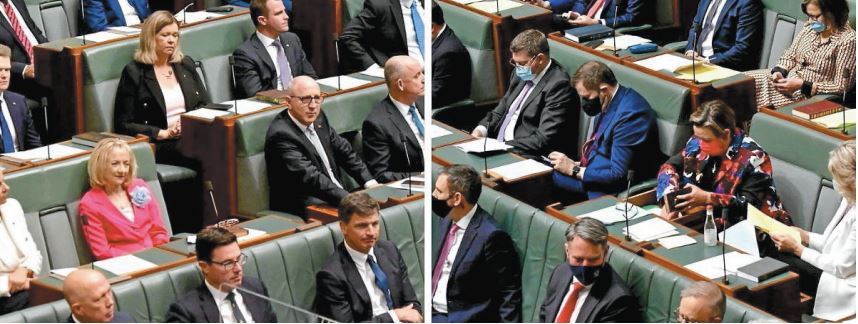
By RICK GLADIGAU, PRESIDENT, AUSTRALIAN DAIRY FARMERS Australian Dairy Farmers (ADF) is working with the 47th Parliament to deliver on our policy priorities and advocacy targets, recognising that not every
By RICK GLADIGAU, PRESIDENT, AUSTRALIAN DAIRY FARMERS Since 1942, Australian Dairy Farmers (ADF) has been representing and advocating for the dairy farmers of Australia. That’s 80 years of lobbying for
By RICK GLADIGAU, PRESIDENT, AUSTRALIAN DAIRY FARMERS THIS year marks 10 years of the Australian Dairy Sustainability Framework – recognised as one of the first industry-wide agricultural sustainability frameworks in
By RICK GLADIGAU, PRESIDENT, AUSTRALIAN DAIRY FARMERS
WHILE high opening milk prices are critical for the viability of the Australian dairy sector, increasingly volatile global markets are taking effect with rising cost pressures through the supply chain.
There is strong competition from processors in the market, which is fantastic for dairy farmers. ADF recognises that these opening prices for milk at the farmgate are strong, and we believe there is potential for more increases because processors need to meet existing domestic and international contracts with a limited milk supply.
However, the costs of fodder, fuel, fertiliser and electricity are skyrocketing, eating into the margins of most dairy producers.
Currently, the biggest cost is grain, with wheat prices jumping 25 per cent in recent weeks. In extreme cases, feed costs can represent one-third of a dairy farm’s turnover.
In a volatile market, the increase in the milk price paid to farmers is not keeping pace with the unprecedented rises in the cost of farm inputs. Some dairy farmers are under significant pressure.
It is timely for farmers to review their operations in response to the increasing input costs.
Real action needed to support dairy recovery
The next three years is a defining period for the sustainability of the Australian dairy industry. As the recognised national policy and advocacy organisation working for dairy farmers, we will be doing our utmost to ensure the reality of this situation is well understood by the Labor Government and consumers.
The government made pre-election pledges that respond to several issues in our policy statement – which if properly executed – will help the profitability and sustainability of dairy farmers. These include:
More money needed for regions, biosecurity, jobs
Beyond these pledges, ADF is calling on Federal Government to invest more in regional development, biosecurity capabilities and a skilled regional workforce to reduce risks to dairy production, support the adoption of supply chain traceability reforms and reduce the impact of pests and weeds.
It is heartening to read that 88 per cent of respondents to the 2022 National Dairy Farmer Survey reported an operating profit in 2020/21. With the rising cost of inputs during the past two months, the outlook for some farmers in 2022/2023 is less optimistic.
For many dairy farmers, the uplift in opening prices will give them the confidence to continue to invest into their farms. For others, however, labour shortages, high beef cattle prices and soaring land values, will see some farmers make a business decision to exit the industry.
Due to the surging costs of farm inputs, the need for movement in retail prices is critical. A significant upward movement in milk pries at the checkout in the short to medium term is essential.
The ongoing strength of the dairy sector is crucial to Australia’s future, as we navigate the Covid-19 recovery phase. Resilient and prosperous regional communities need a robust dairy sector.
We look forward to working with the new Labor Government to deliver on our election platform, much of which seeks to drive profitability and sustainability through the Australian dairy industry. This includes creating even more transparency of prices across the dairy supply chain.
By HEATH COOK, ADF DEPUTY PRESIDENT
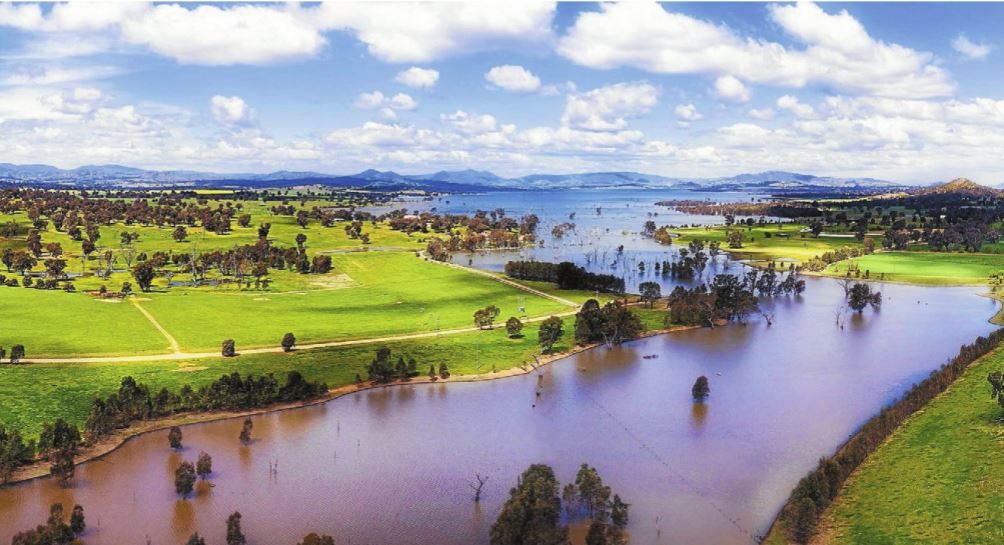
Dairy farmers across New South Wales and South-East Queensland face a long road to recovery after recent flooding. Almost three years of stress from fires, drought, and pandemic-related workforce issues have seen the recent floods place enormous mental and financial strain on farmers.
At least 290 farms have been affected. Accounts of damage and losses include 200-head herds wiped out, infrastructure and machinery swept away by floodwater, kilometres of fencing ripped from the earth – with winter crops, fertiliser and fodder being collateral damage.
Stories of heroism abound, of farmers working tirelessly to rescue people and livestock alike. In the aftermath though, it is keeping herds fed that is proving to be a daily challenge.
There has been a significant toll on animal health, with conditions such as lameness and mastitis becoming prevalent. Exhausted, distressed and undernourished, cows that would usually produce 20-30 litres daily are giving barely a trickle.
Cold, wet weather has scythed its way through calf populations. Rescuing heifers and cows sunk deep in mud is a daily event. Costs are likely to be in the range of hundreds of millions.
Many farms are not only experiencing stock feed issues but fuel shortages, phone and internet outages.
Dairy Australia is working with government, industry bodies and emergency response services to provide aid services. Flood-affected farmers and land managers can call the Department of Primary Industries’ hotline on 1800 814 647 to request assistance for emergency fodder, aerial surveillance and veterinary assistance.
Emergency fodder distribution centres have been set up in Casino, Alstonville, Grafton and Coraki, and reimbursement for emergency fodder freight has been made available by the Rural Assistance Authority in New South Wales. Need for Feed, a volunteer service coordinated by Lions International is also supplying fodder.
Farmer welfare and mental health is a priority. After prolonged strain, there is a real risk of farmers leaving the industry. Dairy Australia encourages farmers to make use of recovery centres, as well as grant application support for flood recovery services. Grants of $25,000 are available for small farmers, and up to $75,000 for primary producers. Zita Ritchie at NSW DPI is managing New South Wales support, with Belinda Haddow at Subtropical Dairy supporting farmers from affected areas in Queensland.
One-off disaster payments have been announced by the federal government, available to farmers from 80 local government areas across New South Wales and Queensland, to help with livestock assessment, veterinary support, euthanasia and burial costs. Funds are also being released to fast-track road repair.
Norco Cooperative has been severely impacted by the floods, particularly the Norco ice cream factory, feed mill and two rural stores. The federal government, in partnership with the New South Wales government, has announced a business support package to help restore operations and assist with ongoing employment.
The floods, like other disasters from recent years, have highlighted challenges facing the dairy industry. Not limited to animal welfare and human mental health impacts, increasing instances of fire, drought and flooding could see insurance premiums rise to untenable levels for some farmers. These risks need to be addressed in a long-term manner, as implications carry on long after acute events – as demonstrated by the long tail of mental hardship, cow health issues and financial strain that has followed these floods.
Any rise in prices for dairy foods on retail shelves at this time may likely be a necessity for ensuring dairy farmers make it through these challenges and stay on their land with their mental health intact.
Now, more than ever, our beloved northern industry needs to know that we ‘have its back’.
Moving forward, we recognise that insurance will be a challenge, and let me assure every farmer affected by the floods that ADF will be working on this issue with representatives from the insurance industry.
At meetings of the National Coordination Mechanism, attended by the Hon Bridget McKenzie, Minister for Emergency Management and National Recovery and Resilience, and the Director General of Emergency Management Australia, Joe Buffone, ADF has represented the national dairy industry’s interests.
If retail prices for dairy products increase, one of the reasons will be the floods. If this happens, please tell everyone that the increase is an absolutely necessity to ensure flood-affected farmers survive this disaster.
By DAVID INALL, ADF CEO
Lumpy skin disease (LSD) virus, identified in March in Indonesia – and Singapore shortly thereafter – is posing a threat to Australian livestock. The proximity of these nations to Australia means the disease could be transferred to Australian cattle or buffalo via windborne biting insects. Currently, the virus is only around 3,000 kilometres from Australia. Once introduced, the virus is very hard to eradicate.
Australia has restricted the importation of certain live viruses for laboratory purposes, primarily to reduce the possibility for such diseases to escape and spread. However, an exception is being made so that CSIRO’s Australian Centre for Disease Preparedness, Geelong, can begin developing vaccines for lumpy skin disease.
Australian Dairy Farmers (ADF) supports the development of safe, effective vaccines for lumpy skin disease virus, in acknowledgement of the significant risk this disease poses to the industry.
The virus does not affect humans – but has serious implications for animal health. It causes emaciation, damage to hides, a decrease in milk production, fever, reproductive losses and can ultimately be fatal. This can lead to major disruptions to livestock trade and dairy supply. There would also be trade implications for Australian exports if Australia was to suffer a lumpy skin disease detection.
The disease, identifiable by nodules on animal skin, is usually spread by flies, mosquitoes, and ticks. Infected animals can also contaminate products and equipment.
The federal government is working with its counterparts in Indonesia to stem the outbreak and prevent the disease from making its way to Australia. Current prevention efforts are extensive, with strict import regulations and conditions to prevent the disease entering via traveller, cargo and mail pathways. However, the risk of spreading via insects crossing the ocean is Australia’s primary concern.
Without local research, Australia would have to rely on sending samples overseas for diagnosis and, if confirmed, importing vaccines. These can be of inferior quality to Australian standards and obtaining adequate quantities could be a challenge. With Australia undertaking development, vaccine supply will not be an issue for Australian farmers. Once developed, the vaccine will also be shared with neighbouring nations.
Livestock industries as well as the Australian Governmentsupport importation of the live virus. Internal policies have been amended to ensure safety and security. This approach is being echoed across other parts of the industry.
A taskforce has been set up by Agriculture Minister David Littleproud. The group, led by Dr Chris Parker – former chief executive of the Australian Pests and Veterinary Medicines Authority – will coordinate the federal government’s newly-announced $61 million commitment to boosting northern frontline biosecurity.
Vaccine development within Australia is crucial to preventing major outbreaks and eventually eradicating the disease, if possible. Most vaccines currently available from overseas have shown capacity to cross with wild strains of the virus, producing virulent variants that transmit more rapidly.
With such a significant exotic disease on Australia’s doorstep, we must remain vigilant, and farmers are always urged to contact their local veterinarian if they see any signs in their herd, In the case of LSD, after an initial period of high fever (41°C) and swollen lymph glands, the animal may develop large, firm nodules that are up to 5 cm in diameter in the skin..
An important element of the industry’s response has seen ADF partnering with the Red Meat Advisory Council (RMAC) to form a high-level cross-industry taskforce to ensure coordination and collaboration across all affected industry sectors. The taskforce is comprised of senior representatives of RMAC, ADF, the National Farmers’ Federation, and the relevant industry service providers.
The taskforce’s membership ensures we can seek the requisite skills to undertake appropriate action and establish technical committees as determined by the taskforce to ensure the broader agriculture sector can monitor, manage and work with government to reduce the likelihood and potential impact of any incursion.
by RICK GLADIGAU, ADF PRESIDENT
As the voice of dairy farmers in your regions, Australian Dairy Farmers (ADF) actively provides input on key focus areas for development in Dairy Australia’s Annual Operating Plan (AOP).
This year, for the 2022/23 operating plan, our consultation with Dairy Australia started earlier, went deeper into discussing the priorities and has lasted longer than the consultations for previous plans.
Dairy Australia is the national services body for the Australian dairy industry, and is funded by a combination of industry, government and research organisations to advance the interests of dairy farmers. This includes levies paid by dairy farmers and matching payments from the Commonwealth Government for eligible research and development (R&D) activities.
Together with Dairy Australia, ADF took the opportunity to engage earlier in the consultation to provide meaningful input to the annual R&D activities supported by the plan.
Strengthening research, productivity
The consultation process started with a review of recent changes in the operating environment and how these might affect work under each of the seven strategic priorities in the DA strategic plan 2020-2025.
Several key areas of focus emerged at the workshop, with feed base/pasture identified as the most important area of focus for the next DA annual operating plan. Additional focus areas centred on continued research and monitoring of productivity and dairy’s competitive position with other sectors, as well as increased policy development and support, leaning into more state and regional based issues.
One of the key directions to emerge from this consultation was a call for the R&D to focus on productivity, growth and reducing farmers’ cost base. Suggestions included building resilience in the dairy industry through scenario planning to ensure farmers can maintain low-cost production and exploring alternative innovative farming methods such as how to use feed to reduce carbon emissions/methane in the value chain as well as build adaptation of feed base and pasture feed to changing environments.
Strengthening collaboration, best practice
Critical success factors identified for DA operations and the dairy industry included greater collaboration between ADF and DA, more celebration of the dairy industry’s best practice along with greater engagement of the workforce, industry and emerging leaders, especially the Young Dairy Network.
To update our members on the progress with development of the next operating plan, ADF will host a briefing session in May. At this session we will report on how our input has been incorporated into the plan.
Keeping abreast of what is happening in domestic and international markets was important to all members as this helps us identify and explore the future opportunities in agriculture, and better understand our competitive position compared with other sectors.
Defining dairy’s role in agriculture
By strengthening the collaboration of dairy farmers with government, industry and research organisations, we increase transparency and build trust, as we ultimately want to continue to play a key role in Australian agriculture.
Now that we have clear guidance from Dairy Poll 2022 as to the income for research and innovation programs in the future, ADF will keep working with Dairy Australia to ensure the dairy levy is invested in work that delivers.
By RICK GLADIGAU, PRESIDENT, AUSTRALIAN DAIRY FARMERS
Australian dairy farmers have reason to celebrate. The future of milk trading is looking brighter.
Last week, a key first step has been taken which delivers monthly milk price transparency and competition, as the Australian Milk Price Initiative (AMPI) ran its first regional milk spot markets.
Trading was done on the Mercari platform, owned and operated by the Financial and Energy Exchange. These regional spot markets deliver the monthly price transparency necessary to enable a forward financial hedging market like those seen in New Zealand, the US and Europe. Such financial markets already enable dairy farmers and processors to lock in prices up to three years forward for some of their milk.
As the national representative body for dairy farmers, Australian Dairy Farmers (ADF) has advocated for and sponsored the AMPI and encourages dairy farmers to take advantage of the trading platform.
Not only will the AMPI empower dairy farmers when they sell milk, it will also increase transparency and build trust. As said at the launch, ‘there is no more transparent price signal than an open market price!’.
The benefits to the dairy industry do not end there. The AMPI will improve risk management across the supply chain with back-to-back pricing from customer to processor to farmer, providing the ability to lock in margins across the chain. Better margin and risk management enables better planning, which, in turn, drives investment and growth across the supply chain. More investment means a strong dairy industry.
Among the concerns to emerge from industry consultations during the development of the Australian Dairy Plan was a call for ‘New measures to increase transparency and help manage market risk, including the establishment of a functioning milk price market and new risk measures backed by government legislation’.
This is something the ADF has been helping to achieve.
At the ADF we have been working closely with government and industry to develop the AMPI. Similar trading platforms are already operating for other agricultural sectors, including wool and grains.
Through consultation with industry bodies and the dairy community, and with a grant from the Federal Government, the new trading platform will allow Australian dairy farmers to leverage their competitive advantage.
In 2019, a pledge of $560,000 towards the development of a milk trading platform was one of the most significant election promises the dairy industry received from the Morrison Government.
While the launch of the AMPI is an important step in the right direction, the work is not over yet.
Seed funding is required for the AMPI’s governance and operating model, as well as education for participants. It is our view that these funds can come from the Improving Market Transparency in Perishable Agricultural Goods Industries Grant Program. This program will run over three years from 2022–23 to 2024–25. A total of $5 million of grant funding is available.
Ongoing investment and innovation are key to the future of the dairy industry. With an open market where farmers can choose who they sell their milk to, at what cost, and on what terms the future is looking brighter.
By DARYL HOEY*
Agriculture and in particular livestock production has been central to formal global talks about sustainable food production and healthy diets hosted by the United Nations in past weeks.
There have been passionate voices on food, biodiversity and climate. Mostly, these voices have respected all dimensions of sustainable food production from cultural and economic to nutrition and environment.
For our part Australian dairy has a long history in sustainability and is committed to being part of the solution to the world’s biggest sustainability challenges, including climate change and food insecurity.
First and foremost, an unhealthy diet is not sustainable. Our industry nourishes people across the world daily. Milk, cheese and yoghurt are nutrient-rich with proven health benefits. Dairy is a staple food with traditions woven into society. It’s affordable and accessible meaning it can be part of many cultural diets.
Seventy-nine per cent of Australians agree that dairy foods are essential for good health and wellbeing,
Dairy has and always will be a food – not a fad.
As an industry Australian dairy stands for a healthier world, for people and the planet.
It is not lost on us that livestock industries such as dairy contribute methane to the atmosphere from cow burping. These gases are short-lived relative to those from fossil fuels however there is still an opportunity for us to improve our performance and do more to protect the environment in which we operate.
It’s in our nature – and in our hands – to action on climate change; 94% of Australian dairy farms have implemented practices to reduce greenhouse gas emissions (GHGs) and GHGs from manufacturers are down 27% since 2010/11, according to the 2020 Australian Dairy Industry Sustainability Report. The report also shows that 93% of waste from manufacturers is diverted from landfill. We are committed to meeting the challenge of climate change and looking after our natural resources.
In relation to economic development Australian dairy is committed to creating a vibrant industry that rewards dairy workers and their families, their related dairying communities, business and investors.
Dairy provides jobs and income for many families and contributes to social cohesion in regional communities. Eighty-six per cent of people in regional areas think dairy is an essential part of their community.
In 2019/2020, Australian dairy processors generated $15.7 billion in revenue and contributed $12.4 billion to Australian GDP. The industry directly employs 42,600 people. It brings regional communities to life.
Australia’s dairy farmers and manufacturers are innovative. We think ahead. This enables us to be part of the solution to food and agriculture’s biggest sustainability challenges, now and in the future.
The Australian Dairy Sustainability Framework sets out what we do to reward our people, make nutritious products, care for our animals, and leave the environment in better shape for the future.
We report our progress towards sustainability goals and targets every year for all to see. Our sustainability promise is to produce nutritious food for a healthier world. It’s a promise we aim to keep.
If people planning the future of food take into account the social, economic and environmental impacts of food production Australian dairy will be part of whatever food system emerges over time.
* Daryl Hoey is Chair of the Dairy Sustainability Steering Committee, which directs the Australian Dairy Sustainability Framework, a whole-of-industry initiative from the Australian Dairy Industry Council.
By TERRY RICHARDSON, ADF PRESIDENT
A GOOD season and improving returns for dairy farmers doesn’t necessarily mean it is easy for everyone in the industry.
Dairy farming is the career we choose because we love the industry, and the quest for a strong balance sheet is part of that.
Yet, even when the figures are looking good, the requirements of dairy farming – a career that involves living where you work and cows which need attention 365 days a year – can seem relentless.
A survey of the New Zealand dairy industry last year showed that 60 per cent of respondents said at least one of their team had experienced a mental health issue in the previous year.
Although to the best of my knowledge there has not been similar research in Australia, it’s not hard to imagine that there would be a similar result in this country.
While we are much more prepared to talk about mental health now, there is still an inherent unwillingness to acknowledge it in ourselves or our friends or work mates.
It seems at times we consider mental and physical health differently, and this may be at the root of why many are afraid to speak up or acknowledge they have an issue.
If you break your arm, there is a course of action you take – you follow that and there is an outcome. You get the x-ray, you may get surgery, you get another x-ray to check it’s okay and the episode is over.
Dealing with a mental health issue in comparison may appear to be complex, and could require ongoing treatment, much like some physical injuries require ongoing physiotherapy.
For some people, the problem may be with them for a lifetime but there are things that we can do which can help and we should strongly encourage people to seek that help.
The biggest fear that many of us have when we recognise that things are not right with a relative, a friend or a worker (or even ourselves) is that we don’t know how to help.
While you may not have the professional skills to help, you are able to reassure others that they are not alone, and that there are people who can help.
Knowing that you, your friend or worker can get help is reassuring not only to them, but to you as well.
A good season doesn’t guarantee wellbeing, nor does addressing particular issues like sourcing extra labour. That very issue – the lack of workers – means some are working longer and longer hours simply to just carry out the basics.
Working smarter and not harder allows time to relax, go on a holiday or even take a bigger picture view of your business and make decisions and plans. But you can’t do that if you don’t have people to fill in. It’s one of the drivers behind the ADF advocating for Government to take a multi-pronged approach to address the worker shortage.
At ADF, we also get caught up in the daily activities around policy and advocacy and while these are critical, we care deeply about the wellbeing of dairy farmers. We are assessing the merits of developing a wellbeing program, specifically for dairy farmers in Australia.
We understand that much of our work in advocacy does lead to a better dairy farming environment and less business pressure on our farmers, but alongside this, the ADF needs to dedicate specific time to check in and support the wellbeing of dairy farmers.
Ideally, ADF would like to see specific research mirroring that done within the New Zealand industry to gauge the extent of mental health issues within the Australian dairy industry.
That understanding could allow us to tailor programs which could make the greatest positive impact.
We also appreciate fully that the good season many of us are lucky enough to be experiencing this year does not take all the pressure off and while paddocks may be full of feed and milk prices are strong, it’s by no means easy.
For almost 80 years, ADF has cared about wellbeing of dairy farmers – and this will always be at the heart of what we do. We are in the final throes of a new strategic plan, and for the first time we are including a focus area on mental health. It’s important to us, and we know it’s important to you.
Whether it’s lobbying for things that farmers can easily see will make a difference like increasing the labour force to the less obvious planning around farmer health, we’re seeking better outcomes for our members.
So, my challenge for you is to look around your farm and ask yourself “what is my most valuable asset?” If that’s your rotary dairy and something was wrong with it, you wouldn’t hesitate to fix it – right?
Now, think again about your biggest asset – let’s say it’s you, your family or your fellow workers. If any of them are not functioning at their best due to a mental health issue, why would you respond any differently?
By TERRY RICHARDSON, ADF PRESIDENT
For the first time in a decade Australian dairy farmers will get a say on how much money is invested in the industry services managed and delivered by Dairy Australia.
This is an outcome sought and welcomed by Australian Dairy Farmers (ADF).
In July, the Levy Poll Advisory Committee (LPAC) recommended that a poll of all dairy farmers be held to set the future level of the dairy service levy – a levy that funds Dairy Australia, including its research and innovation.
This is good news for dairy farmers. We can now consider whether the current dairy levy, or a potential increase in the levy, is needed to ensure the investment in farmer RD&E meets our farmers’ needs.
The LPAC is developing the voting options which will go on a ballot. This process has included seeking input from dairy farmers to determine the voting options, including an option they prefer.
As the voice of dairy farmers, ADF is deeply committed to working with our members, LPAC, Dairy Australia and the broader levy payer farmer base to ensure that an effective and engaging consultation process is undertaken prior to the March 2022 vote.
It is essential this process delivers clear and concise feedback from farmers, because the levy poll should not be taken likely. It will determine how much is invested into RD&E for the coming years.
We expect that levy payers will be informed of voting options by late September, with the levy poll to be held in March 2022.
Importance of leadership in levy poll
While it’s too early for ADF to form a view on a preferred voting option, we know as the national representative body, we need to build consensus among people with diverse views on what levy is best for the industry.
However, we do anticipate that an option to maintain current levels will be included in the levy poll, together with any options for an increase that LPAC may determine appropriate.
The levy poll provides dairy farmers with the opportunity to have a say on an important investment that works to benefit their dairy farm businesses and advance the industry as a whole.
We need to ensure the levy sets the industry up for success, by resourcing Dairy Australia to:
Throughout the levy poll development and voting, ADF and the state dairy farmer organisations will engage and consult with our membership.
When you vote – via the poll – I encourage you to think about the broader industry and services that benefit everyone, now and into the future.
To our members, no matter what you vote I have great respect for belief and conviction and urge you to consider the poll carefully.
By CRAIG HOUGH, DIRECTOR, STRATEGY & POLICY
A CRITICAL shortage of employees is stalling growth in the Australian dairy industry.
While issues around sourcing employees are not new, there are factors which are now making it even harder to find and retain staff.
As an industry, we are working with both the Federal and State governments to find ways to address the workforce issue with a mix of lobbying and creative solutions such as projects to implement the National Agriculture Workforce Strategy
We know and understand that the dairy industry is changing. Farms are getting bigger. The average herd size has lifted from 93 cows in 1985 to 276 in 2018/2019, and there is a growing number of 1000-cow herds. Managing this increasing complexity requires more higher skilled staff.
Not only is it difficult to find staff who are willing to work within the industry, it is also hard to find employees with the skills required to manage and work within larger, more complex operations.
The situation was brought to a head last year with COVID-19, as potential employees and even casual staff like AI technicians faced border closures and the inability to travel freely to work.
Here, Australian Dairy Farmers (ADF) and Dairy Australia stepped in to find an immediate, workable solution. It was the tip of the iceberg though, as the Australian Dairy Plan had already identified a capable workforce was a key to future dairy industry productivity.
As such, ADF has been working hard on a number of fronts to lift not only the number of employees but the profile of the industry to attract staff.
The solutions we are working on aim to deliver a bigger field of employees as soon as possible because of the dire need across the industry.
The measure of success will be that by 2025, all sections of the industry will have access to the people they require to meet their operating needs, and who are trained in the skills required for their roles.
We believe that potential employees who see a career path within the dairy industry is key to growing the workforce.
Offering that career pathway and lifting dairy positions into the professional realm could attract more applicants of a higher quality if they could see the ability to progress professionally. If they are engaged and can see a satisfying future career, they are also more likely to stay within the industry.
Making this happen is important, so ADF has been working with education providers to develop a flexible means of study which can be taken up across institutions and across borders. ADF has also stressed the importance of offering “bite size” learning, which recognises the inability of employees to leave the farm for longer periods.
We know that capacity building in employees is vital in ensuring a skilled workforce as well as retention of that workforce.
It’s why the Pathway for People in Dairy Program, including the Dairy Passport, was launched in September last year was a significant step. ADF working in partnership with Dairy Australia ensured the initiative was fast tracked with government funding support. It offers one-stop shop for both employers and employees, which not only acts as an information source but also provides a portable skills registry.
It is also important to try to remove some of the hurdles for future employees, be they short term casuals or those wanting a longer-term career.
Short term workers are useful for some purposes and JobSeeker applicants can fill employment gaps.
Working around this was one of the recommendations in the National Agriculture Workforce Strategy, so we feel it is important to keep the pressure up on this issue.
Overarching all these efforts must be the push for recognition of dairy, and more broadly agriculture, as an important and valuable industry.
Wanting to be part of a vibrant industry will only add to the other initiatives in terms of attracting employees.
While as the ADF we are taking the lead, we also need help from dairy farmers across the nation.
To find the best solutions, we need input to the collection of employment statistics and modelling, which will help set the scene for future policy development and the creation of employment programs.
WHAT WE ARE DOING
© 2025 Australian Dairy Farmers Ltd. | All Rights Reserved | ADF Privacy Policy | Website Terms & Conditions